Gravity casting uses the weight of molten metal to fill a mold instead of forcing the metal into the cavity at high pressure.
In industrial manufacturing, gravity casting usually refers to gravity die casting or gravity permanent mold casting, where aluminum or another suitable non-ferrous alloy is poured into a reusable metal mold. This gives the process very different tooling, geometry, production-volume, and material characteristics from sand casting or high-pressure die casting.
This guide explains how the process works and when it makes sense.
What Does Gravity Casting Mean?
The term gravity casting can be used in two ways.
In the broadest sense, any casting process in which molten metal enters the mold mainly under gravity could be described as gravity poured. Sand casting and many investment casting operations also fill molds this way.
In manufacturing and sourcing, however, gravity casting normally means gravity die casting, also called gravity permanent mold casting.
In this process, molten metal is poured into a reusable iron or steel mold without the high-pressure injection used in conventional die casting.
The relationship is therefore:
permanent mold casting → gravity permanent mold casting is one type
Other permanent-mold processes can use low pressure or other methods to fill the die.
The ASM Handbook treats gravity-fed permanent mold casting as a distinct production process, particularly for aluminum alloys.
This terminology matters when requesting quotations. If a drawing simply says die cast, suppliers may assume high-pressure die casting. If the required process is gravity permanent mold casting, it is better to specify that clearly.
How Gravity Die Casting Works Step by Step
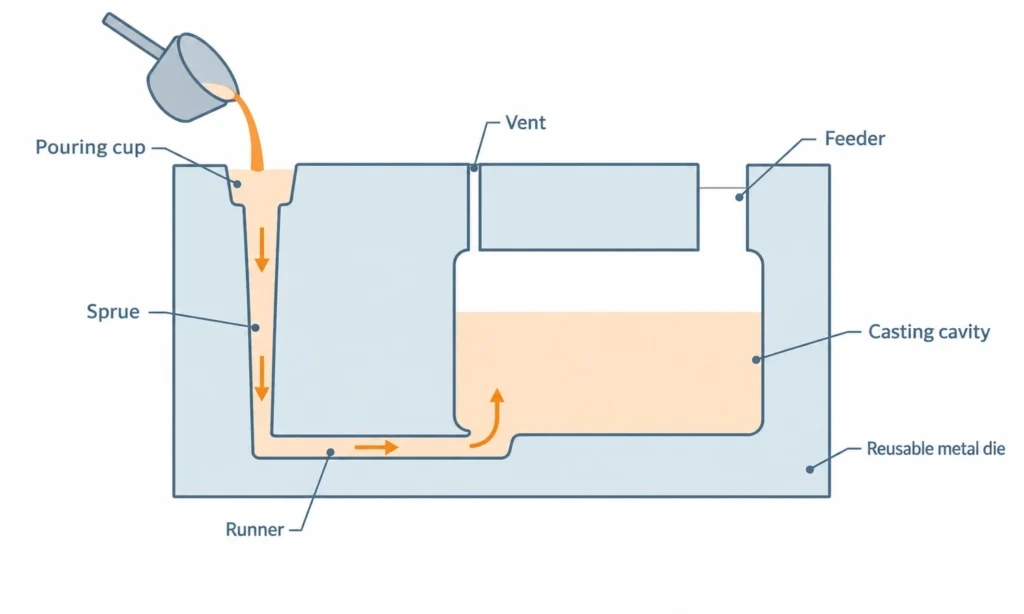
Gravity casting begins with a reusable metal die containing the negative geometry of the component.
Before pouring, the mold is normally brought to a controlled operating temperature and coated with a suitable refractory or release coating. This coating can protect the die surface, assist part removal, and influence heat transfer between the molten alloy and the mold.
Any required cores or inserts are then positioned and the die is closed.
Molten metal is poured into the gating system and flows into the cavity under gravity. There is no high-speed injection piston forcing the alloy through the die.
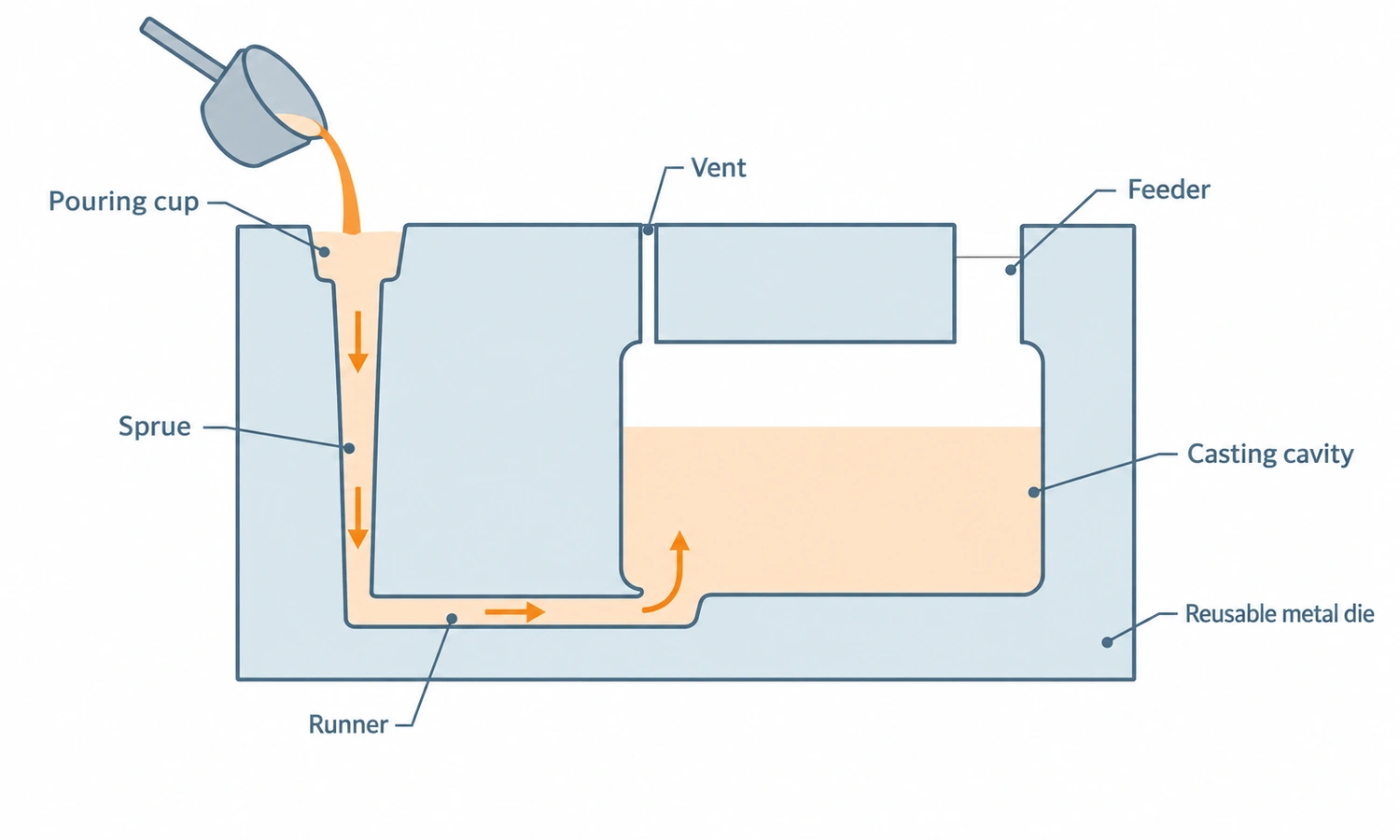
Once the cavity is full, the metal transfers heat into the metal mold and solidifies. The die opens, the casting is removed, and the same mold is prepared for another cycle.
The American Foundry Society describes permanent-mold production around the same basic stages of mold preparation, filling, solidification, and casting removal.
Some gravity-casting equipment also tilts the die during pouring. Controlled tilting can change how the metal enters the cavity and help reduce uncontrolled free fall and turbulence, but the basic principle remains the same: the mold fills through gravity rather than high-pressure injection.
Why Gravity Casting Mainly Uses Aluminum Alloys
Aluminum is by far the material most commonly associated with gravity permanent mold casting.
That is not accidental.
A reusable metal die has to survive repeated contact with molten alloy. Aluminum’s casting temperature is manageable enough for iron or steel tooling to provide practical mold life, while suitable aluminum casting alloys also offer good fluidity and useful mechanical properties.
A356 is one common example because it combines castability with the ability to develop higher mechanical properties through heat treatment.
Selected copper and magnesium alloys can also be permanent-mold cast, but gravity casting is much less commonly associated with steels and high-temperature nickel alloys.
Those materials require much higher pouring temperatures, placing far more severe thermal demands on reusable metallic tooling.
As a result, if a component requires carbon steel, stainless steel, or a nickel-based superalloy, processes such as investment casting or sand casting normally deserve consideration before gravity permanent mold casting.
Material is therefore one of the fastest ways to determine whether gravity casting belongs on the process shortlist.
Reusable Metal Molds, Sand Cores, and Gravity Casting Part Design
The defining feature of gravity die casting is its reusable metal mold.
That reusable tool improves consistency between production cycles, but it also creates design restrictions.
The solidified component has to come out of the die.
Parts therefore normally require a suitable parting line and draft on surfaces that move relative to the mold during opening. Straightforward internal features can sometimes be created with retractable metal cores.
More complicated cavities may use expendable sand cores placed inside the permanent mold before pouring. When permanent metal tooling is combined with disposable cores, the process is often described as semi-permanent mold casting.
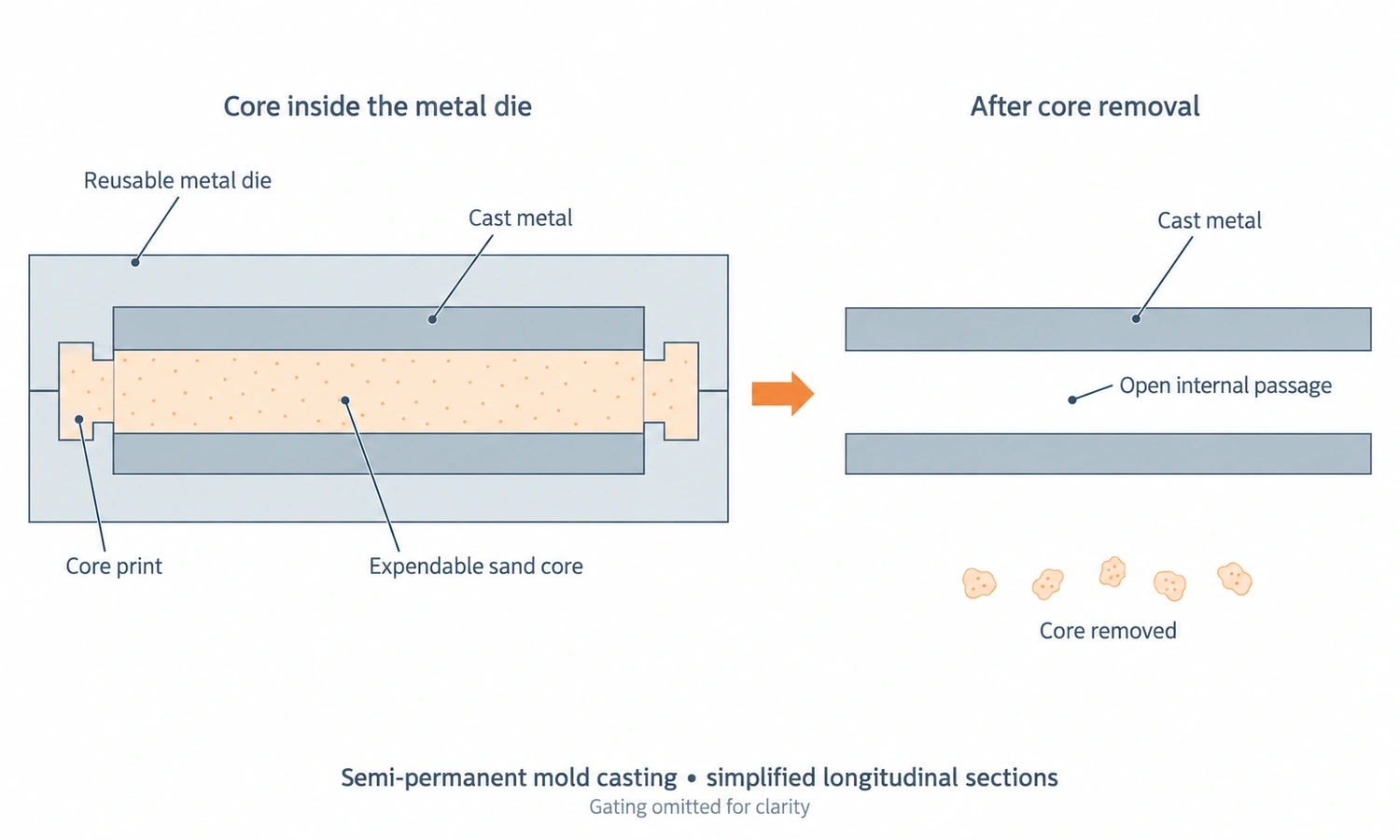
This combination allows gravity casting to produce housings, fluid passages, and other components that could not be made with a simple two-piece die.
However, every additional core, slide, or moving insert increases tooling and production complexity.
Highly convoluted internal passages or severe undercuts can eventually make another casting process more practical.
This is one reason reusable-die geometry should be considered early in the design rather than after the part has already been optimized for another manufacturing process.
Surface Finish, Tolerance, and Mechanical Properties of Gravity Castings
A metal die gives gravity casting several advantages over conventional sand molds.
Because the cavity is machined into a stable reusable tool, dimensions and surfaces can be reproduced consistently from cycle to cycle once the process is established.
Gravity-cast components therefore generally achieve smoother surfaces and better dimensional repeatability than conventional sand castings.
The metal mold also extracts heat more rapidly than sand.
Faster cooling can create a finer solidification structure in suitable alloys and contributes to the mechanical-property advantages often associated with permanent-mold aluminum castings.
However, the process should not be described as automatically producing stronger parts simply because gravity is used.
Final properties depend on the alloy, solidification conditions, casting soundness, heat treatment, geometry, and inspection requirements.
Critical features may still need CNC machining.
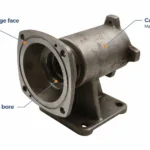
Bearing bores, sealing faces, threads, and accurately positioned mating surfaces are good examples. The casting forms the main geometry, while machining adds precision only where the component function requires it.
For this reason, gravity casting and CNC machining are often complementary rather than competing operations.
Porosity and Heat Treatment in Gravity-Cast Aluminum
Gravity casting fills the mold much more slowly than high-pressure die casting.
This can allow a calmer filling pattern and reduce some of the air-entrapment problems associated with very high-speed injection.
But it would be inaccurate to call gravity castings porosity-free.
Gas porosity can still result from melt quality, dissolved hydrogen, turbulent flow, oxide films, or unsuitable process control. Shrinkage porosity can develop when solidifying sections are not adequately fed.
The gating and feeding system therefore remains an important part of gravity-casting design.
The slower filling process also has another practical advantage for suitable aluminum alloys: heat treatment is commonly used after gravity casting.
A356, for example, may be supplied in a T6 condition when the component and specification require it.
The ability to combine casting with solution treatment and aging makes gravity permanent mold casting attractive for structural aluminum components that need more than cosmetic shape and dimensional repeatability.
This does not mean every pressure die casting is impossible to heat treat. High-vacuum and other high-integrity die-casting routes can reduce trapped gas and expand heat-treatment options. The difference is that conventional gravity casting does not begin with the same high-speed gas-entrapment problem.
Gravity Casting vs High-Pressure Die Casting
Gravity casting and high-pressure die casting both use reusable metal dies, but their filling methods create very different production characteristics.
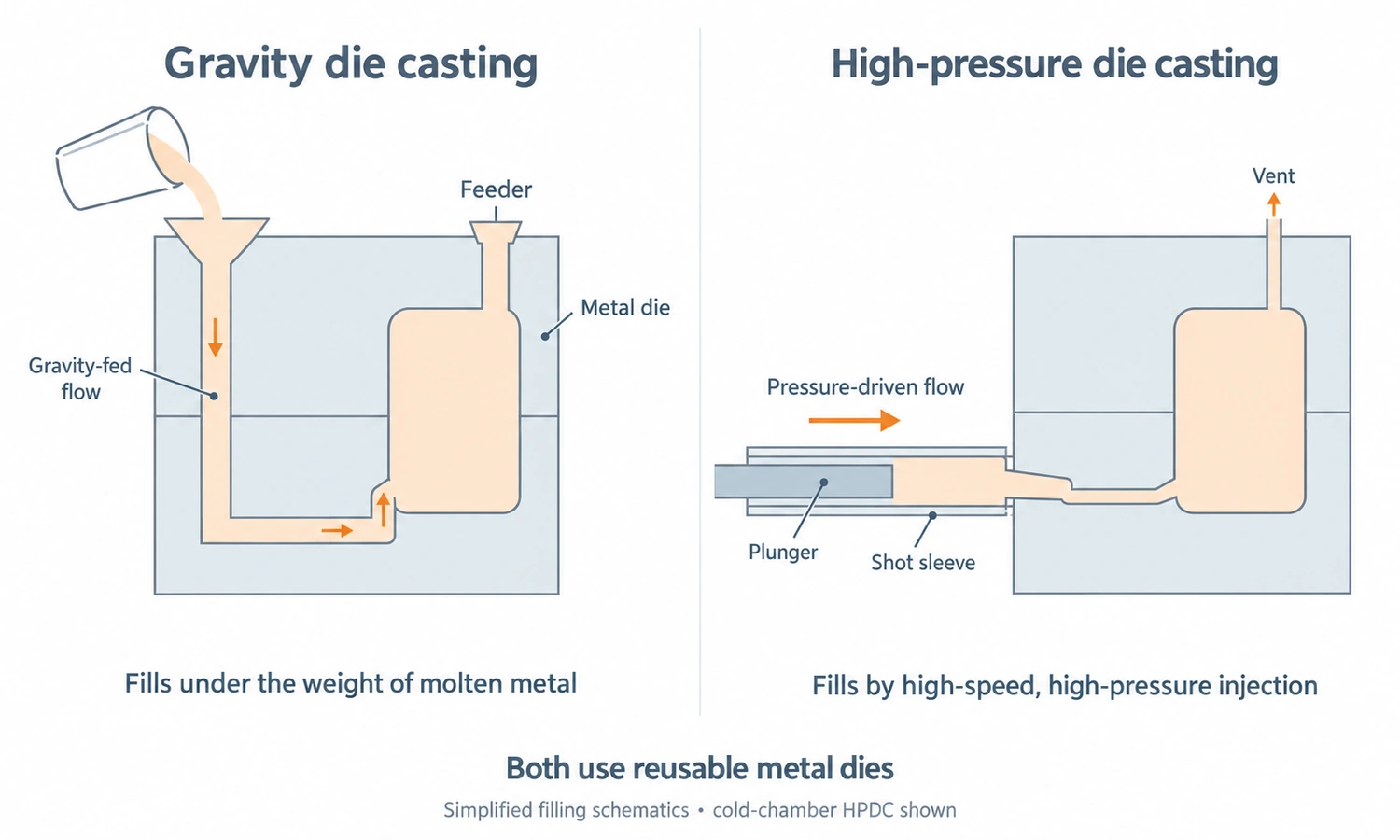
| Factor | Gravity Die Casting | High-Pressure Die Casting |
|---|---|---|
| Mold Filling | Metal flows mainly under gravity | Metal is injected at high speed and pressure |
| Typical Materials | Mainly aluminum and selected non-ferrous alloys | Aluminum, zinc, magnesium and other suitable non-ferrous alloys |
| Production Speed | Moderate | Very high |
| Thin Walls | More limited | Major advantage |
| Tooling Investment | Significant | Usually higher |
| Heat Treatment | Common for suitable alloys | Depends strongly on process and porosity control |
| Internal Cores | Sand or metal cores may be possible | Conventional sand cores are generally unsuitable |
| Best Fit | Repeat structural aluminum parts | Stable, high-volume, thin-wall parts |
High-pressure die casting is particularly powerful when a stable design will be produced in large quantities and needs thin walls, fine detail, and short cycle times.
Gravity casting occupies a different space.
It is often attractive when reusable tooling is justified but the component does not require HPDC’s extreme production speed or thin-wall capability. Structural performance and post-casting heat treatment may also weigh more heavily in the decision.
For a broader explanation of HPDC materials, tooling, and production economics, see YTD’s Die Casting Guide.
Gravity Casting vs Sand Casting
The biggest difference between gravity permanent mold casting and sand casting is the mold.
Gravity casting uses the same metal die repeatedly.
Sand casting creates an expendable sand mold that is broken apart after each pour.
| Factor | Gravity Permanent Mold Casting | Sand Casting |
|---|---|---|
| Mold | Reusable metal die | Expendable sand mold |
| Initial Tooling | Higher | Generally lower |
| Surface Finish | Generally smoother | Generally rougher |
| Repeatability | Higher | Depends on molding process |
| Part Size | More limited | Very broad |
| Materials | Mainly non-ferrous alloys | Very broad, including iron and steel |
| Complex Sand Cores | Possible but adds complexity | Major strength |
| Typical Production | Repeated production | Low volume through large-scale production |
The reusable die makes gravity casting attractive when the same aluminum component will be produced repeatedly.
Sand casting becomes more attractive when quantities are lower, the component is very large, the alloy is unsuitable for a permanent metallic die, or complex expendable cores provide a major geometry advantage.
Neither process can be selected from volume alone.
A simple aluminum housing produced repeatedly might justify gravity tooling, while a much larger housing required only occasionally may remain far more economical as a sand casting.
YTD’s Sand Casting Guide explains the main sand-mold processes and their selection in more detail.
When Gravity Casting Is the Right Choice
Gravity permanent mold casting is worth evaluating when several conditions appear together.
The material is usually a suitable non-ferrous casting alloy, particularly aluminum. Production quantity is high enough to justify reusable tooling, but the project may not need the cycle speed or thin-wall capability of HPDC.
The geometry also needs to work with a reusable mold. Draft, parting lines, core removal, and ejection should be achievable without an excessively complicated die.
Gravity casting becomes particularly attractive when the component benefits from a combination of repeatability, relatively good surface quality, structural integrity, and post-casting heat treatment.
Typical parts include housings, brackets, pump components, wheels, structural aluminum parts, and other repeated components with moderate wall thickness.
Another process may make more sense when one of those fundamentals changes.
A large iron housing points toward sand casting. A stainless-steel component with complex geometry may favor investment casting. A very thin aluminum enclosure required in very high quantities may favor high-pressure die casting.
The correct decision should therefore start with:
material → geometry → required properties → lifetime quantity → total finished-part cost
rather than choosing gravity casting simply because it appears to sit between sand casting and die casting.
Where Gravity Casting Fits Within YTD’s Casting Process Options
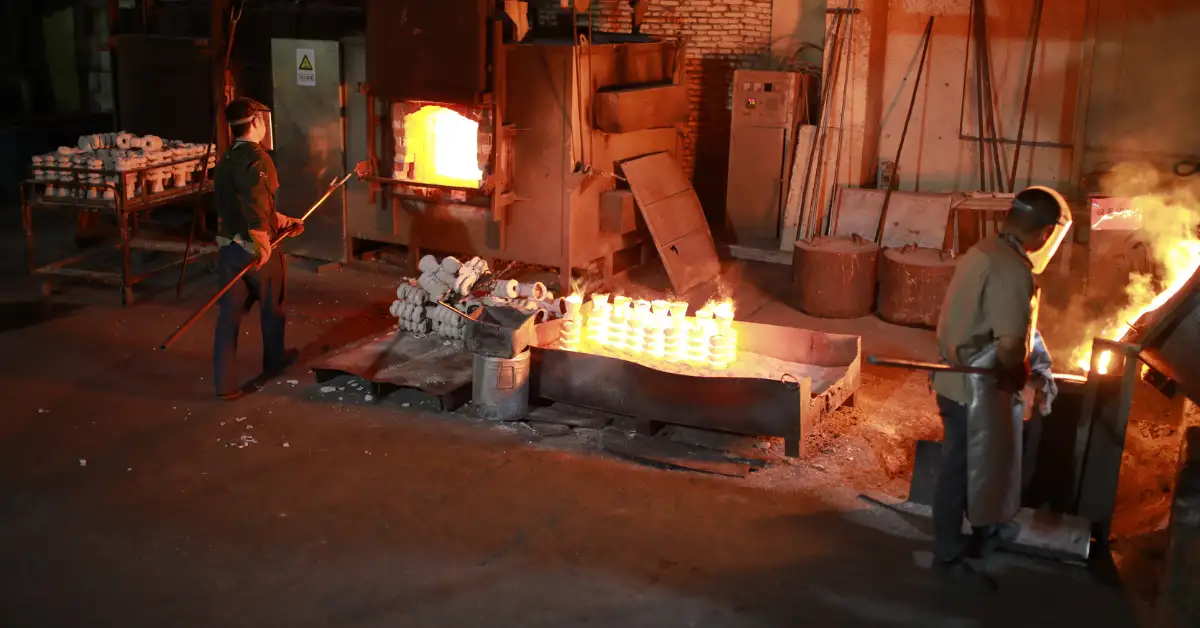
YTD Foundry’s core in-house process is investment casting. Sand casting and pressure die-casting projects are supplied through specialized partner foundries.
Gravity permanent mold casting should be treated as a separate casting route rather than assumed to be the same as conventional high-pressure die casting.
When evaluating a drawing, the first task is to determine which process family fits the required material and geometry.
Steel, stainless steel, and superalloy components often point toward investment casting. Very large or lower-volume parts can favor sand casting. High-volume aluminum or zinc designs with thin walls can favor die casting.
For an aluminum component suited to reusable metal tooling but not necessarily to high-pressure injection, gravity permanent mold casting is another process that should be evaluated on its own technical and economic merits.
Final Thoughts
Gravity casting is best understood as a reusable-metal-mold process in which molten metal fills the cavity primarily under its own weight.
Its strongest applications are repeated aluminum components that benefit from better repeatability than typical sand casting without requiring the speed and thin-wall capability of high-pressure die casting.
Material, geometry, heat-treatment requirements, tooling cost, and lifetime production volume should determine whether gravity casting is the right route.
FAQs
Is Gravity Casting the Same as Gravity Die Casting?
In most industrial sourcing contexts, yes. *Gravity casting*, *gravity die casting*, and *gravity permanent mold casting* commonly describe a reusable metal-mold process filled mainly by gravity. In the broadest technical sense, other casting processes can also use gravity pouring.
Is Gravity Casting the Same as Die Casting?
Not usually. When buyers say *die casting* without qualification, they normally mean high-pressure die casting. Gravity die casting uses a reusable die but fills it without high-pressure injection.
What Metals Are Commonly Gravity Cast?
Aluminum alloys are the dominant materials. Selected magnesium and copper alloys can also be used. Steel, stainless steel, and nickel-based superalloys are generally better suited to other casting processes.
Can Gravity-Cast Aluminum Be Heat Treated?
Yes, when the alloy supports heat treatment. A356 is a common example and can be supplied in heat-treated conditions such as T6 when required.
Can Gravity Casting Make Parts With Internal Cavities?
Yes. Retractable metal cores can form some internal features, while expendable sand cores can create more complicated cavities. Core requirements increase tooling and production complexity.
Is Gravity Casting Better Than Sand Casting?
Not universally. Gravity casting generally offers better repeatability and surface quality for repeated suitable non-ferrous parts, while sand casting provides greater flexibility in alloy, part size, complex cores, and lower-volume production.
When Should Gravity Casting Be Used Instead of High-Pressure Die Casting?
Gravity casting is worth considering when an aluminum component needs reusable tooling and repeated production but does not require extremely thin walls or HPDC-level cycle speed, particularly when heat treatment and structural properties are important.