What Is Investment Casting Wax?
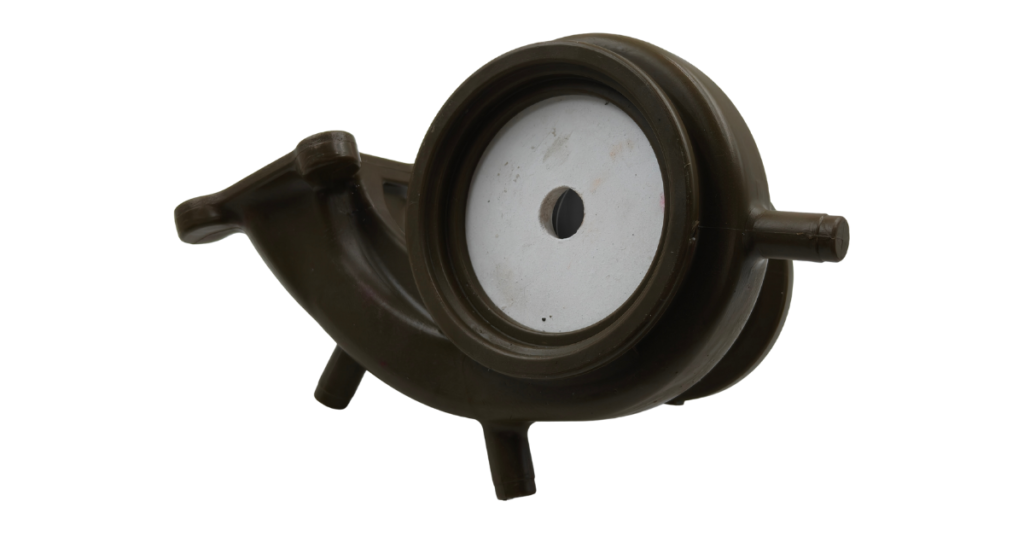
Investment casting wax is an engineered material used to make a sacrificial pattern—a temporary master shape that the ceramic shell copies. The wax is later removed, leaving a cavity that molten metal fills. Although the wax does not remain in the metal part, the pattern establishes the geometry and surface that enter the next stage of the process.
Investment casting and lost-wax casting usually describe the same basic industrial process. The word lost refers to removing the pattern, not to the wax being unimportant.
If you are sourcing a finished casting, you normally do not need to select a wax grade yourself. You need to show the foundry what the pattern must reproduce, how many parts you need, and which dimensions, surfaces, or internal features must be verified.
How Does a Wax Pattern Become a Casting Mold?
The pattern defines the mold cavity through a short sequence: make the pattern, assemble it with the runner and gating system, build a ceramic shell around the assembly, remove the sacrificial material, and prepare the empty shell for metal.
From tooling or digital data to the pattern
In the traditional route, a tool or die forms repeatable wax patterns. Each pattern reproduces one part. It is trimmed, inspected, and prepared for assembly. The Investment Casting Institute’s overview of wax pattern creation also recognizes printed patterns as an alternative route.
A pattern can also be made directly from digital data. The more accurate general term is 3D-printed sacrificial pattern, because the printed material may be wax, a wax-based material, or another material designed to burn out. The actual material and process must be confirmed.
From pattern assembly to an empty ceramic shell
Individual patterns are joined to a runner or tree, which creates the path that later carries metal into the part cavities. The assembly is coated with ceramic material to build the shell.
For a conventional wax assembly, steam dewaxing removes the wax pattern and gating system. A non-wax printed pattern may instead require a qualified burnout route.
In either case, the shell keeps the negative shape after the sacrificial material is removed. After the remaining shell-preparation steps, metal can be poured into the cavity. See the full investment casting process for the stages beyond pattern making.
What Types of Investment Casting Wax Are Used?
Investment casting wax should first be classified by the job it performs. Pattern wax, gating wax, assembly wax, and soluble wax are not competing answers to one question; they serve different parts of the pattern system.
| Wax role | Where it is used | What matters most | Why it matters to the casting |
|---|---|---|---|
| Pattern wax | Forms the part geometry and surface | Flow, dimensional stability, surface reproduction, and handling strength | The shell copies the pattern, so variation or damage can become an upstream casting risk |
| Runner, sprue, or gating wax | Forms the metal-delivery system | Assembly, handling, and compatible removal | The system must remain intact through assembly and shell building |
| Sticky, adhesive, or patching wax | Joins patterns or repairs local areas | Adhesion and controlled application | Poor joints or uncontrolled repairs can affect assembly quality and the surface copied by the shell |
| Water-soluble wax | Creates certain removable cores or internal features | Core integrity and reliable removal | It can support some complex cavities, but it is not the default route for every internal passage |
Filled and unfilled describe formulation, not a separate job
Filled, unfilled, and emulsified are ways of formulating pattern wax. They describe how a wax system balances flow, shrinkage, stability, surface behavior, handling, and reclaim considerations. They should not be listed beside runner wax or sticky wax as if all terms describe the same classification level.
There is therefore no single “best wax” for investment casting. The useful question is: best for which job, geometry, tooling system, and validated process? Industrial pattern wax is a formulated engineering material, so ordinary candle wax or one raw material’s melting point is not a reliable production specification.
How Can Wax Affect the Final Casting?
Wax affects the casting by changing the quality of the pattern that the shell copies. Its flow, dimensional behavior, strength, surface, and removal behavior all matter.
However, wax is one part of a system that also includes the die, equipment, geometry, process settings, handling, shell building, and later metal processing. The ICI Atlas of Wax Pattern Defects reflects this multi-source view.
Flow affects thin features and detail reproduction
The wax must fill the pattern cavity before it sets. If the wax, die, or injection conditions do not support complete flow, thin sections or fine details may show non-fill, flow lines, or weak joining areas.
More flow is not automatically better. The foundry has to match the wax grade with the die, feature geometry, equipment, and validated operating window. This is why there is no universal injection or melting temperature for all investment casting waxes.
Shrinkage and stability affect pattern dimensions
Wax changes dimension as it cools and may continue to respond to support, storage, or handling conditions. Uneven sections and restricted geometry can increase the risk of sink, warpage, or local variation.
Pattern dimensions therefore depend on more than the material label. Die geometry, wax condition, injection settings, cooling, ejection, and the time and support used before assembly can all contribute. A wax specification alone cannot guarantee final casting tolerance.
Strength, surface, and dewaxing affect downstream work
The pattern needs enough strength and toughness for ejection, trimming, inspection, assembly, and shell handling. A pattern that cracks, bends, or is damaged during these steps may no longer represent the intended part.
The shell also starts by copying the pattern surface. Release marks, rough repairs, seams, or other pattern defects may become part of that starting surface. Wax is not the only influence on casting finish, so review other factors that affect investment casting surface finish before assigning one cause.
Finally, the pattern must be removed without creating an unacceptable shell or residue risk. Softening, melting, and congealing behavior vary by wax system; the foundry should use the wax supplier’s data and its own validated equipment and shell conditions rather than one industry-wide temperature.
If your drawing includes thin walls, long ribs, fine details, deep cavities, or surface-sensitive areas, identify them early. The investment casting design guidelines explain the broader geometry decisions that continue beyond wax selection.
Injected Wax Pattern or 3D-Printed Sacrificial Pattern?
Use tooling and injected wax when repeat production justifies the initial tool. Consider a 3D-printed sacrificial pattern when the design is still being validated or the quantity is too low to justify conventional tooling. Neither route is automatically cheaper or more accurate for every project.
An ICI review of additive-manufacturing patterns places established printed-pattern applications in prototype, process-development, bridge-production, and very-low-volume work. It also notes the central tradeoff: individual printed patterns generally cost more, while removing traditional tooling can change total project cost and timing at low quantities.
| Decision factor | Tooling and injected wax pattern | 3D-printed sacrificial pattern |
|---|---|---|
| Traditional tooling | Required before repeat patterns are produced | Not required for the pattern itself |
| Typical project stage | Stable design and repeat production | Prototype, process development, bridge production, or very low volume |
| Design changes | May require tool modification | Digital pattern data can be revised before another build |
| Cost direction | Upfront tooling cost; repeat-pattern economics can improve with quantity | Avoids traditional tooling; each pattern generally costs more |
| Technical confirmation | Tool, wax, injection, and shell process must be validated together | Pattern material, dimensional behavior, burnout, and shell compatibility must be confirmed |
Compare total project economics, not only the price of one pattern. A printed route may reduce tooling commitment while a design is changing. A conventional tool may make more sense when the design is stable and repeat orders can spread the tooling cost.
YTD has in-house tooling design and manufacturing, together with wax-pattern production, trimming, assembly, and inspection. We also offers a 3D-printed wax-pattern route that does not require traditional tooling and is generally used for prototypes, small batches, or early validation.
For direction only, YTD can support a 3D-printed wax-pattern route at quantities around 10 pieces, with a relatively higher unit cost. Conventional tooling projects commonly start at 50 or 100 pieces, the customer normally bears the tooling cost, and the exact route depends on the part and project. These quantities are not a universal economic crossover.
YTD can compare the applicable route for a specific part through its custom investment casting service.
Conclusion
Investment casting wax is temporary, but the pattern’s geometry, surface, and integrity establish the starting point that the ceramic shell copies. There is no universal best wax apart from the job it must perform and the tooling, equipment, geometry, and process conditions around it.
For a finished casting project, the useful route decision is whether repeat production justifies tooling and injected wax or whether a printed sacrificial pattern better fits early validation or a very low quantity. Design stability, quantity, total project economics, and validation requirements should be considered together.
FAQs
Can investment casting wax be reclaimed and reused?
Yes, wax removed during dewaxing can be recovered and reused under controlled conditions. Water, ceramic particles, or other contamination may need to be managed, and the suitable reuse route depends on the wax, treatment, and foundry practice. YTD uses dedicated wax-recovery equipment after steam dewaxing to recover and reuse wax. This does not mean that every recovered wax is suitable for precision part patterns.