Shell molding is a type of sand casting. So when people search for shell molding vs sand casting, they usually mean shell molding versus conventional green sand casting.
Both processes use expendable sand molds, but they create those molds very differently. Shell molding cures resin-coated sand against a heated metal pattern, while green sand uses moist clay-bonded sand packed around a reusable pattern.
That difference affects dimensional consistency, surface finish, wall thickness, tooling cost, part size, production volume, and the amount of machining required afterward.
Shell Molding vs Green Sand Casting: Quick Comparison
| Factor | Shell Molding | Green Sand Casting |
|---|---|---|
| Mold material | Resin-coated sand | Sand + clay + water + additives |
| Pattern | Heated metal pattern | Wood, plastic, metal, or other reusable pattern |
| Mold condition | Thin, rigid cured shell | Moist, compacted sand mold |
| YTD tolerance reference | CT6–CT9 | CT10–CT13 |
| YTD surface reference | Ra 3.2–12.5 μm | Ra 12.5–50 μm |
| YTD wall-thickness reference | 2–25 mm | 5–100 mm |
| YTD part-weight range | 0.1–100 kg | 0.5–5,000 kg |
| YTD max size reference | 800 × 800 × 500 mm | 3,000 × 3,000 × 2,000 mm |
| Tooling commitment | Higher | Lower |
| Design changes | More expensive once metal tooling is built | Usually easier with simpler patterns |
| Best fit | Small/medium repeat parts needing better as-cast quality | Broad size range, large parts, lower tooling commitment |
These figures describe YTD’s current partner-network capabilities rather than universal limits for every foundry.
The pattern is already visible: shell molding trades higher tooling and mold-system cost for better mold consistency, while green sand trades some as-cast precision for greater size flexibility and lower tooling commitment.
How Shell Molding and Green Sand Form Their Molds
The main difference begins before metal is poured.
Shell Molding
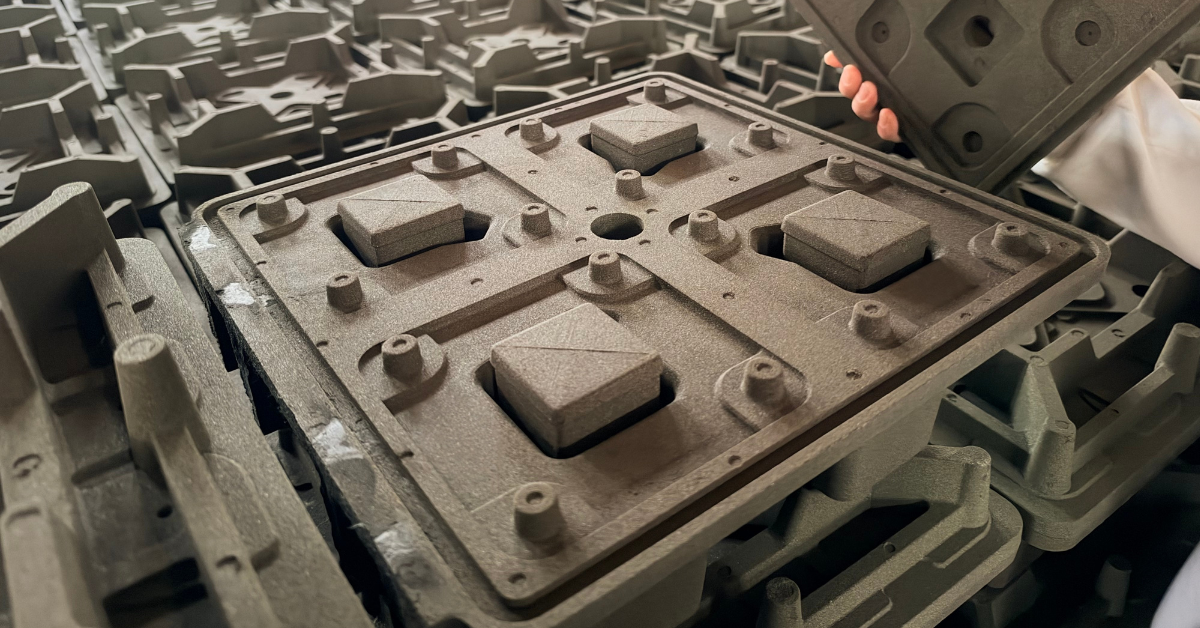
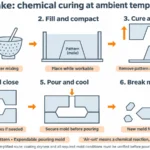
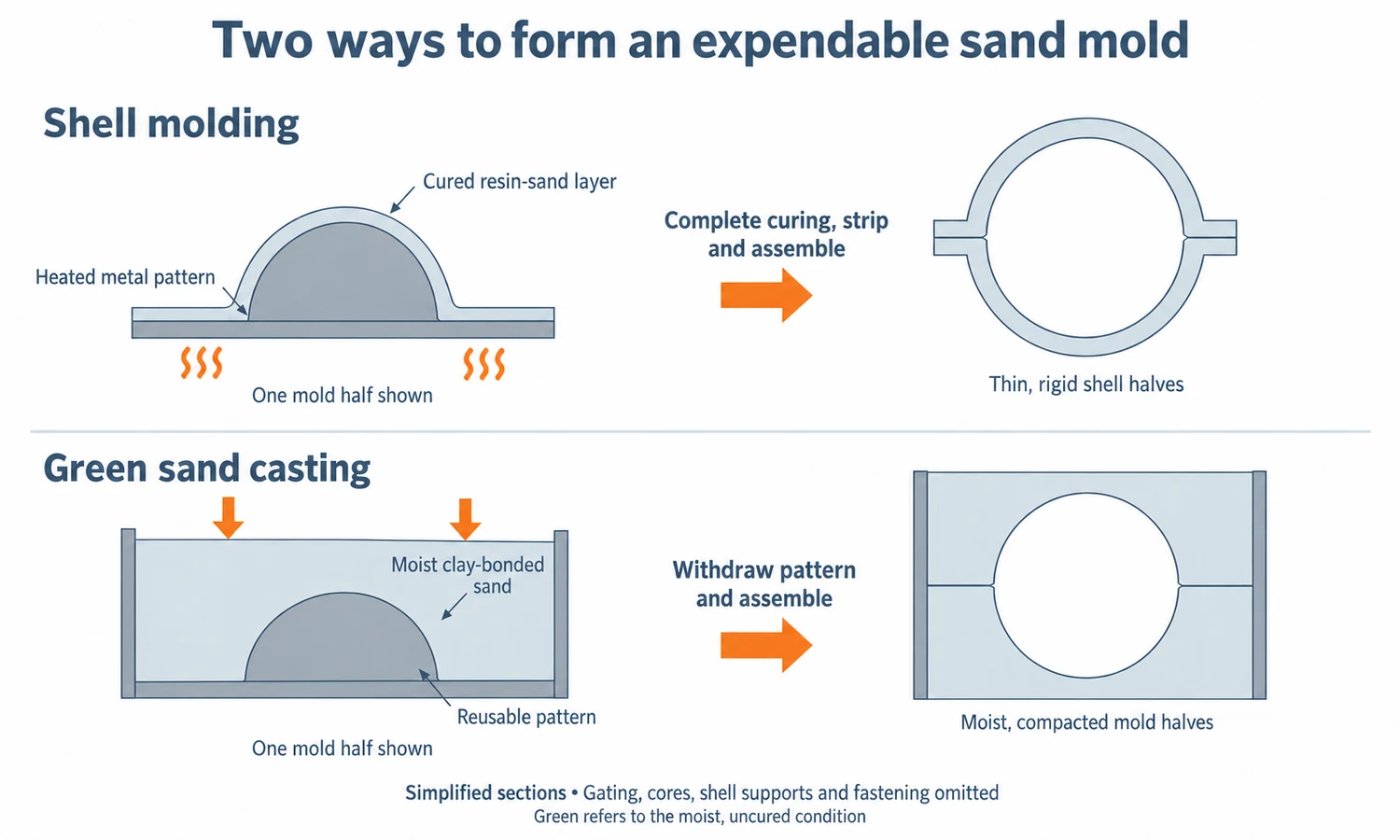
Shell molding uses sand grains coated with thermosetting resin.
The sand contacts a heated metal pattern. Heat cures the resin in the layer closest to the tooling, creating a thin rigid shell. Excess loose sand is removed, the shell is fully cured, and matching shell halves are assembled into a complete mold.
The reusable tooling is metal because it must withstand repeated heating and maintain dimensional stability through many molding cycles.
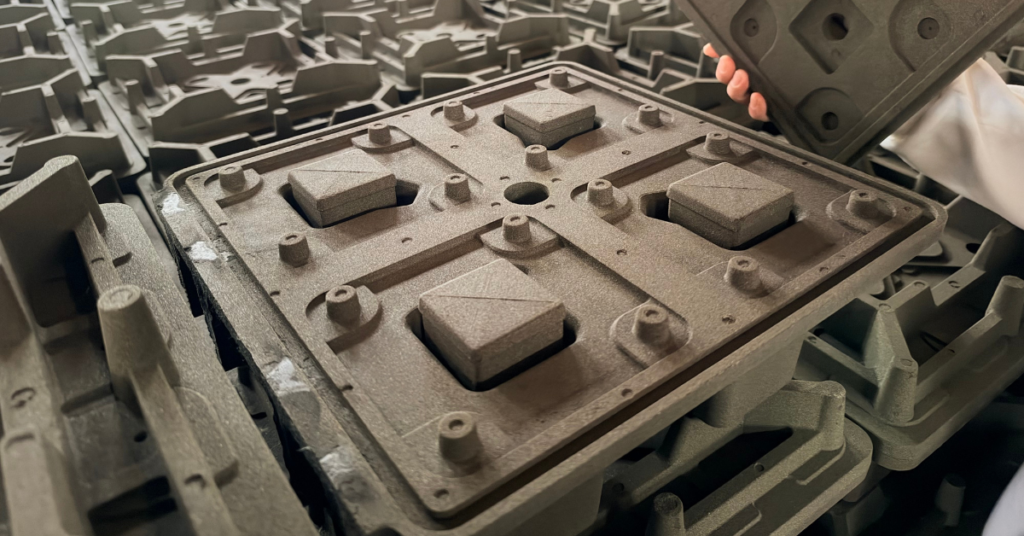
The resulting mold is relatively thin but rigid.
Green Sand Casting
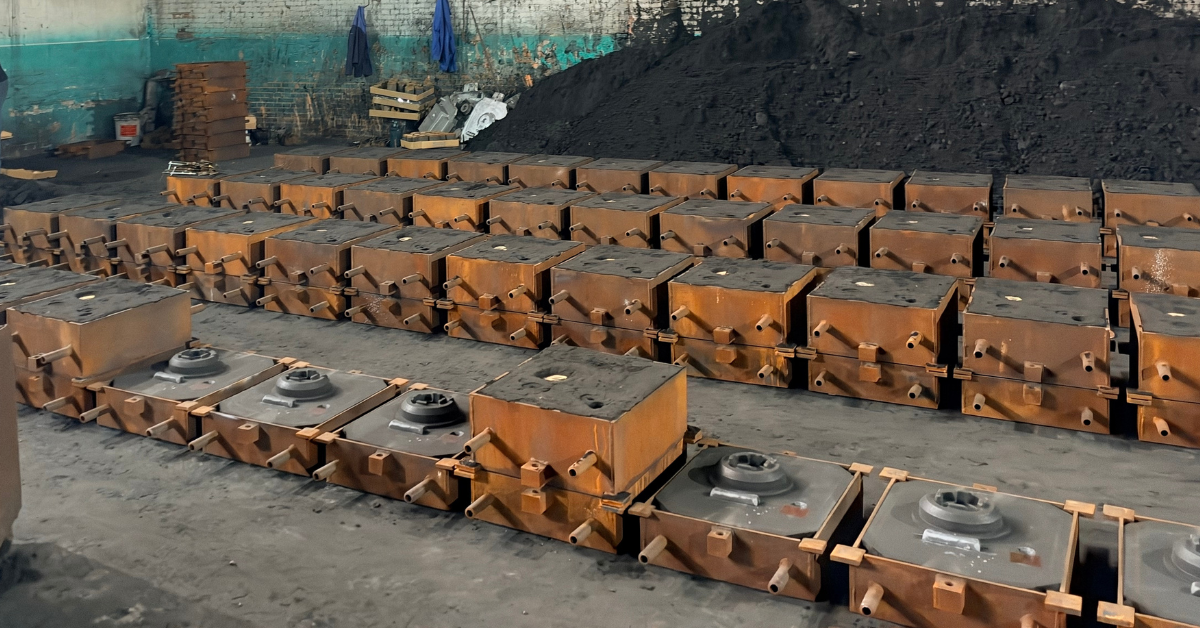
Green sand uses base sand bonded with clay and controlled moisture. The American Foundry Society defines green sand as moist clay-bonded molding sand. (AFS green sand course)
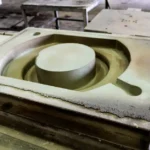
The prepared sand is compacted around a pattern, the pattern is withdrawn, and the mold halves are assembled.
No resin-curing stage or heated pattern is required.
That simpler mold-making route is one reason green sand can be economical across a very broad range of casting sizes and production arrangements.
Our Green Sand Casting guide explains the sand preparation and control side in more detail, while our Shell Mold Casting guide covers the complete shell process.
Dimensional Tolerance in Shell Molding vs Green Sand
Shell molding generally provides tighter dimensional control because its mold surface is created against a rigid heated metal pattern and the cured shell changes less during handling than a moist compacted sand mold.
Within YTD’s current sand-casting network, shell molding is typically supplied around CT6–CT9, while green sand is typically CT10–CT13.
A Steel Founders’ Society of America design study gives a useful independent example for steel castings. In that specific comparison, a dimension across 1 inch was held to approximately:
- Shell mold: ±0.008 in, about ±0.20 mm
- Green sand: ±0.030 in, about ±0.76 mm
The same study notes that actual performance varies by foundry equipment and expertise, so these values are useful as a scale reference rather than a universal process guarantee.
This difference matters most when several surfaces need to remain as cast.
If a housing will later have every flange, bore, and mounting surface machined, paying for tighter as-cast dimensions everywhere may not save much money.
If several interfaces, bosses, ribs, and external features must remain near net shape, shell molding’s dimensional consistency becomes more valuable.
Surface Finish in Shell Molding vs Green Sand
The mold surface controls much of the initial casting texture.
Shell molding can use relatively fine resin-coated sand while still maintaining mold strength. The rigid shell also reproduces the metal pattern consistently from cycle to cycle.
Green sand needs a different balance among sand grain size, clay bonding, moisture, permeability, compactability, and mold strength.
Within YTD’s current network:
- Shell molding: typically Ra 3.2–12.5 μm
- Green sand: typically Ra 12.5–50 μm
The SFSA steel-casting example reports the same general direction using RMS measurements: roughly 300–500 RMS for shell molding versus 500–900 RMS for green sand.
A smoother casting surface does not automatically eliminate machining. Bearing seats, sealing faces, close fits, and precision holes may still need CNC finishing.
The economic benefit appears when improved as-cast quality allows more non-critical surfaces to remain untouched.
Wall Thickness and Fine Detail
Shell molding can generally reproduce thinner sections and finer detail than conventional green sand.
YTD’s current partner capabilities list a practical wall-thickness range of approximately 2–25 mm for shell molding, compared with 5–100 mm for green sand.
The SFSA steel study gives another useful example: the reported minimum section thickness was about 0.15 in for shell molding and 0.25 in for green sand in that production comparison.
The reason is not simply that shell molding uses “better sand.”
A cured resin shell provides a rigid cavity surface with good detail reproduction. Fine sand can be used without relying on the same clay-moisture system needed to hold a green-sand mold together.
Green sand remains effective for ribs, bosses, cores, and complex industrial geometry, but delicate sections and fine repeated details can push the process toward shell molding.
Part Size and Weight
Green sand has a major advantage when casting size increases.
Within YTD’s current network, green-sand castings extend from approximately 0.5 kg to 5,000 kg, with available envelopes up to roughly 3,000 × 3,000 × 2,000 mm.
Shell molding is currently supplied in the range of roughly 0.1–100 kg, with maximum dimensions around 800 × 800 × 500 mm.
That difference reflects the mold system.
A large green-sand mold can be built in a flask or floor-molding arrangement with relatively straightforward pattern equipment.
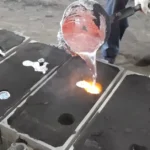
A shell mold requires a heated pattern, cured shell halves, handling equipment, and support for the relatively thin shell during pouring.
Shell molding is therefore strongest in small and medium repeated parts rather than very large castings.
For a large machine base, pump casing, or heavy ductile-iron housing, green sand is usually the more natural starting point.
Materials Used in Shell Molding and Green Sand Casting
Both processes can cast ferrous and non-ferrous alloys, so material alone usually does not separate them as sharply as it separates sand casting from die casting.
Green sand is especially common for gray iron and ductile iron. The American Foundry Society describes green sand as the most common molding technique in U.S. ferrous casting facilities. (AFS foundry sand overview)
Shell molding is also used for ferrous and non-ferrous castings and is particularly useful when repeated steel or iron components need better surface reproduction and tighter as-cast dimensions.
So if the material is gray iron, ductile iron, carbon steel, or another alloy that both processes can handle, the decision usually moves quickly to:
part size + required as-cast quality + production quantity + tooling economics
rather than material alone.
Parting Lines, Draft, and Sand Cores
Shell molding does not remove the conventional pattern-withdrawal problem.
Like green sand, the reusable pattern normally has to leave the mold before metal is poured.
Both processes therefore need practical parting lines and draft, and both can use separate sand cores for internal cavities.
The difference is mainly in how accurately the mold reproduces those features.
The rigid shell can hold core locations, parting geometry, and fine details more consistently across repeated production.
Green sand can still handle very complex cored castings, and its greater size flexibility makes it particularly useful for large housings with substantial internal cavities.
For a broader explanation of how green sand, shell molding, lost foam, and other sand systems fit together, see our Sand Casting Types guide.
Tooling Cost and Design Changes
Shell molding requires a heated metal pattern capable of producing the cured shell repeatedly.
That means the initial tooling commitment is higher than a straightforward green-sand pattern.
The SFSA comparison classifies green-sand pattern cost as low and shell-mold tooling cost as medium, reflecting the move from simpler patterns to dedicated metal tooling.
This affects design changes too.
If a product is still evolving, modifying a wood, plastic, or relatively simple green-sand pattern can be easier than changing finished metal shell tooling.
A local boss or wall change in shell tooling may require re-machining or replacing a metal insert or pattern feature while preserving the heated tooling geometry.
Once the design is stable, that same metal tooling becomes an advantage: it produces highly repeatable mold shells over many cycles.
Shell molding therefore rewards design stability and repeated production more than green sand does.
Production Volume
It is tempting to describe green sand as “low volume” and shell molding as “high volume,” but that is too simple.
Green sand can serve both jobbing work and highly automated mass production. Automotive and other ferrous foundries use mechanized green-sand molding at very large volumes.
Shell molding also suits repeated production, but its case becomes strongest when the volume is high enough to justify dedicated metal tooling and the better as-cast quality produces savings later in the process.
So volume alone does not choose between them.
A high-volume iron part with ordinary tolerance requirements may remain an excellent green-sand application.
A medium-volume component with demanding as-cast surfaces and several features that would otherwise need machining may justify shell molding much earlier.
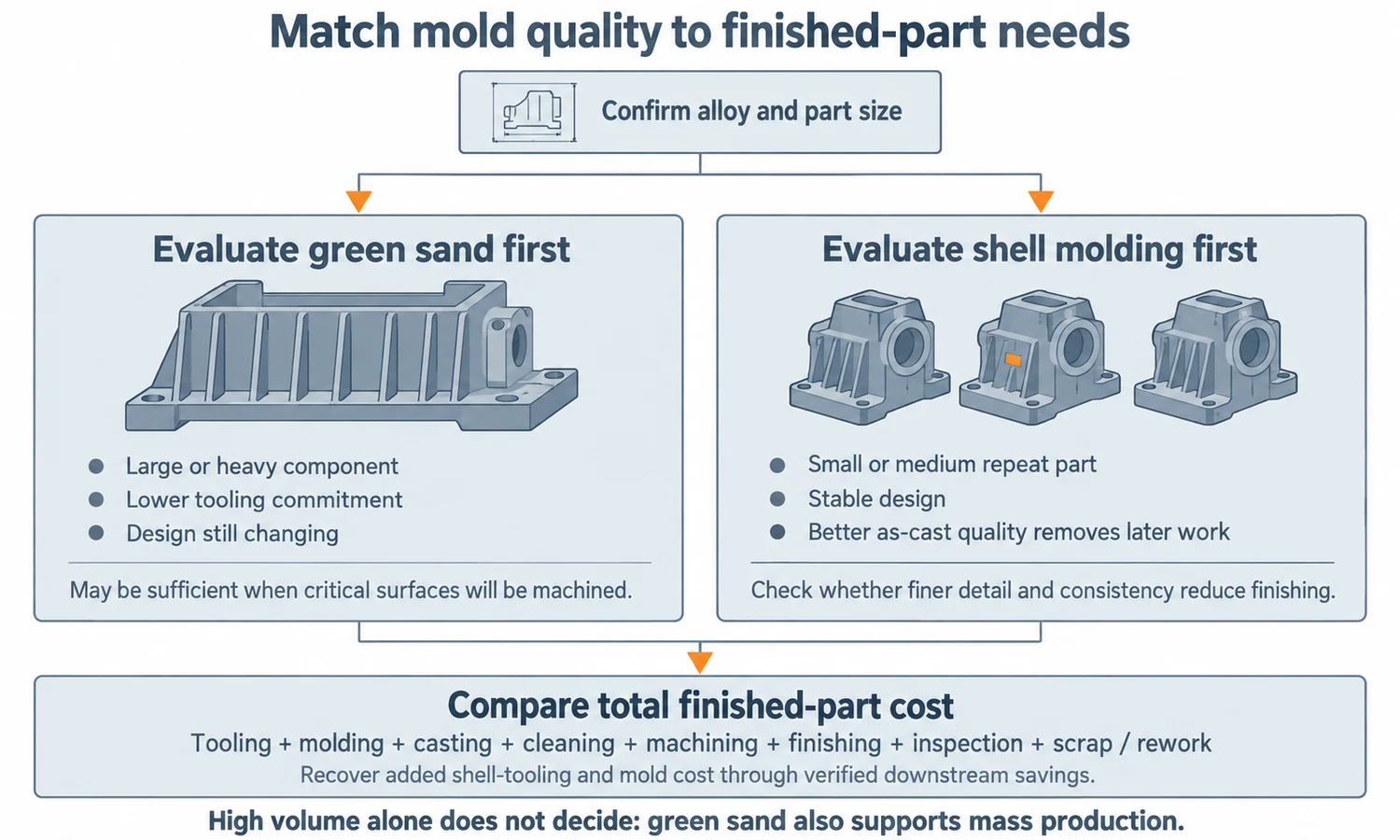
The better question is:
Does repeated production recover the additional tooling and mold cost through better castings or less downstream work?
Machining and Finished-Part Cost
This is where shell molding can justify its higher mold-system cost.
Suppose two foundries cast the same small steel housing.
The green-sand blank is cheaper, but it needs more stock on the flange, heavier grinding, and machining on several external surfaces.
The shell-mold casting costs more before machining but leaves more geometry acceptable as cast.
Comparing only the raw casting price makes the green-sand route look cheaper.
Comparing the finished component may reverse the result.
The calculation should include:
tooling + molding + casting + cleaning + machining + finishing + inspection + scrap / rework
If the part already needs extensive CNC machining, green sand’s lower tooling commitment may remain more economical.
If shell molding allows several surfaces and details to stay as cast, the additional mold cost can be recovered through reduced machining and finishing.
This is the same logic we use in the broader Casting Process Comparison: compare the finished manufacturing route, not just the price of the raw casting.
When to Choose Shell Molding
Shell molding is usually the stronger candidate when the part is small or medium sized, the design is stable, and improved as-cast consistency has real value.
It becomes particularly attractive when the drawing includes relatively thin sections, fine repeated detail, tighter as-cast dimensions, or surfaces that would otherwise require additional machining or grinding.
Within YTD’s current partner range, shell molding is most relevant to repeated castings up to about 100 kg where CT6–CT9 and Ra 3.2–12.5 μm capability matches the finished-part requirements.
If those characteristics do not remove downstream work, the extra tooling and mold cost may not be justified.
When to Choose Green Sand Casting
Green sand is usually the better starting point when the component is large, heavy, still changing, or does not require shell-mold-level as-cast precision.
It is also attractive when tooling investment needs to remain modest or when the geometry relies on large sand cores and substantial mold volume.
Within our current network, green sand extends to approximately 5,000 kg and much larger mold envelopes than shell molding.
The wider tolerance and rougher surface are not necessarily disadvantages if the critical faces will be machined anyway.
For machine bases, heavy housings, pump bodies, and many gray- or ductile-iron parts, the lower tooling burden and large size capability often matter more than producing every surface near net shape.
Shell Molding vs Green Sand: A Practical Selection Guide
| Project Requirement | Process to Evaluate First |
|---|---|
| Very large or heavy casting | Green sand |
| Lower tooling commitment | Green sand |
| Design likely to change | Green sand |
| Small/medium repeated part | Shell molding |
| Finer as-cast surface | Shell molding |
| Tighter as-cast dimensional control | Shell molding |
| Thin sections or fine repeated detail | Shell molding |
| Extensive machining already planned | Green sand may be sufficient |
| Reduced machining is a major goal | Shell molding becomes more attractive |
| High-volume general-tolerance iron casting | Green sand can still be very competitive |
| Stable repeat production with precision requirements | Shell molding |
This table is most useful after the alloy and part size are already known.
Neither process is automatically the “better sand casting method.” The better process is the one whose mold quality matches what the finished component actually needs.
How We Handle Shell Mold and Green Sand Projects at YTD
Both shell molding and green sand casting are supplied through specialized partner foundries in our sand-casting network.
We use the drawing to decide which route fits the project rather than treating shell molding as an automatic upgrade.
If the component is large, heavily cored, or mostly machined after casting, green sand often provides the more efficient route.
If it is smaller, repeated in stable quantities, and benefits from tighter as-cast dimensions or smoother surfaces, shell molding can reduce later finishing work.
Our Sand Casting Service lists the current size, tolerance, wall-thickness, and surface-finish ranges available through both processes.
Final Thoughts
Shell molding and green sand casting are two ways of creating an expendable sand mold, but they optimize different things.
Shell molding invests more in metal tooling and a rigid resin-sand shell to improve surface quality, dimensional consistency, and thin-section capability. Green sand keeps tooling and molding more flexible while supporting much larger parts and a wider range of production arrangements.
Choose between them by asking whether better as-cast quality will remove enough machining and finishing to justify the additional shell-molding cost.
FAQs
Is Shell Molding a Type of Sand Casting?
Yes. Shell molding is a sand-casting process that uses resin-coated sand cured against a heated metal pattern. The comparison shell molding vs sand casting normally means shell molding versus conventional green-sand casting.
Is Shell Molding More Accurate Than Green Sand Casting?
Generally, yes. YTD’s current network lists shell molding at CT6–CT9 and green sand at CT10–CT13. In an SFSA steel-casting example, shell molding held about ±0.008 in over 1 in compared with ±0.030 in for green sand.
Which Process Has a Better Surface Finish?
Shell molding. YTD’s current reference is Ra 3.2–12.5 μm for shell molding compared with Ra 12.5–50 μm for green sand.
Which Process Is Better for Large Castings?
Green sand. It scales much more naturally to large mold volumes and heavy industrial parts. In YTD’s current network, green-sand casting reaches about 5,000 kg, while shell molding is listed up to about 100 kg.
Is Shell Molding Always More Expensive?
Its tooling and mold materials are generally more expensive because it requires heated metal tooling and resin-coated sand. The finished part can still cost less if the improved casting quality removes enough machining, grinding, or rework.
Can Both Processes Use Sand Cores?
Yes. Both can use expendable sand cores for internal cavities. Shell molding can also use shell-process cores where their dimensional repeatability and surface characteristics benefit the part.