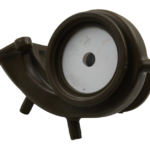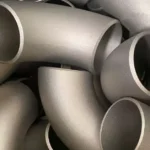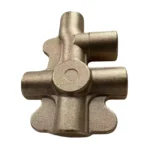
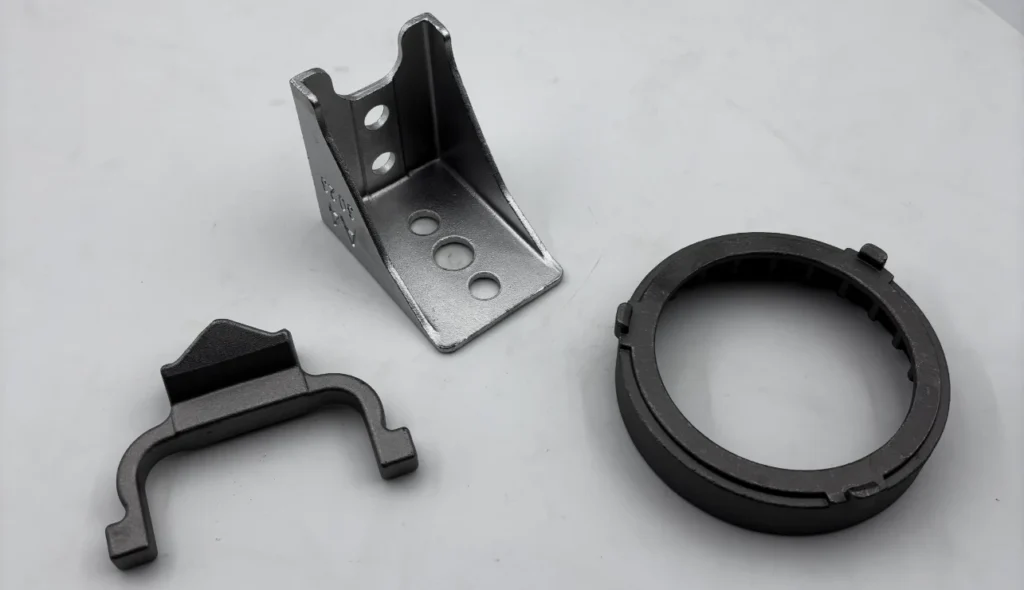
Steel investment casting is where the lost-wax process really shows its worth, especially if you already know the basics. It’s especially useful when the part or component is a shape too complex or have tight dimensions after casting.
Because steel is poured at temperatures close to 1,600°C, the mold and casting process must be carefully controlled. Even so, the process gives manufacturers more freedom to produce strong steel parts that would be difficult or expensive to make through machining alone.
So can you investment cast carbon and alloy steel? Yes, and it is one of the best fits this process has, so let’s look at why.
Why Investment Casting Works So Well for Steel
You’ll find a lot of processes that can shape steel in any way, shape, or form you want. However, few achieve it as cleanly as lost-wax casting. Three reasons stand out once you look at what you actually get back when you do it.
One Piece Instead of Multiple Little Pieces
Investment casting lets you pour complex steel parts as single pieces. That simply means no welds and no fasteners holding separate sections together. Every joint eliminated is one less weak point that can crack or loosen under heavy load.
Less Machining Needed on Hard Metal
Steel is slow and expensive to machine, and the toughest alloy grades are worse. Casting the part close to its final shape skips most of that cutting. You spend machining time only on the surfaces that truly need it; this is where the real savings in money and time show up.
The Heat and Temperature Is Better
Steel pours far hotter than metals like aluminum or zinc, near 1,650°C. The ceramic shell shrugs off that heat, which is exactly why the process suits steel. Die casting cannot touch the metal at all, since no steel die would survive the pour.
Carbon Steel in Investment Casting
Carbon steel is the affordable workhorse, and it casts a little easier than its alloy counterparts. It welds well and carries load, making it the best and most efficient for everyday parts and components. The trade-off is corrosion, since plain carbon steel rusts without paint or plating.
1018
For brackets and lighter structural parts, 1018 offers a useful mix of strength and easy welding. Its low carbon content also makes forming simpler, while case hardening can be added when the surface needs better wear resistance.
WCB
Valve bodies and pump housings often use WCB because it handles general pressure service well. Tensile strength is typically around 485 MPa, and the alloy casts reliably when the feeding system is designed correctly.
1045
Higher carbon gives 1045 better hardening potential after heat treatment. This makes it a practical option for specific components that need stronger and harder surfaces against repeated wear.
These three cover the carbon grades you’ll meet most often, not the whole family. Plenty of others cast well, so treat this as a starting point rather than the full menu.
Alloy Steel in Investment Casting
On the other hand, adding elements like chromium and molybdenum buys something carbon steel can’t match. Alloy steel hardens deeper and stays tough, and the casting keeps those gains after heat treatment.
4140
4140 is the chrome-moly all-rounder. This alloy has a strong balance of toughness and wear resistance. It shows up in shafts and gears that take steady, repeated load. Heat treat it after casting and it holds up under fatigue better than plain carbon steel.
4340
4340 adds nickel to the chrome-moly mix, which pushes strength higher still. It suits heavily loaded structural parts where failure is not an option. Landing gear components and drive parts are typical homes for it.
8620
And last in this list but most definitely not least is the 8620. The 8620 is a case-hardening grade built for wear. It runs a tough, ductile core under a hard outer skin after carburizing. That combination handles impact and surface wear at the same time.
As with the carbon grades, these are the alloy steels that come up most, not every one available. The right pick always depends on the part, so treat the list as a guide.
Here is the payoff, and it is the real reason we pair these two metals. Alloy steel is slow and expensive to machine, and the hardest grades sometimes need grinding or EDM just to shape them. Casting close to final shape skips most of that, so alloy steel saves far more through steel investment casting than easy-cutting carbon steel ever does.
Pros and Cons of Investment Casting Steel
Every process has a price, and this one is no exception. Steel investment casting buys you shape and finish that other methods struggle to match, but it asks for money and patience in return. Weigh both sides against your part before you commit, since the balance shifts with size and volume.
The Pros
- You cast complex steel shapes in one piece, with no draft angles to design around, so the geometry on your drawing is the geometry you get back.
- Tolerances run tight, often better than 0.005 inch per linear inch, which means many features come off the shell ready to use with no machining at all.
- The cast part takes full heat treatment, so it reaches the grade’s rated strength instead of settling for soft as-cast properties.
- You machine only the critical fits, which cuts the most cost on hard-to-cut alloy steel, where every hour of cutting is expensive.
The Cons
- It costs more per part than sand casting, especially as parts grow, since each pour uses a fresh ceramic shell that never pays itself off.
- Part size is limited, so very large steel castings suit sand casting or fabrication better than a ceramic shell.
- Lead times run longer, because each shell takes days to build up in layers before the metal is ever poured.
- Decarburization can soften the surface if the foundry runs the process carelessly, though a careful shop keeps the hardness where your drawing needs it.
Investment Casting vs. Sand Casting for Steel
Steel is almost never die cast, since no steel die survives the pour. So, the real choice is between investment casting and sand casting and here’s how they stack up.
| Factor | Investment Casting | Sand Casting |
| Surface finish | 3.2 to 6.3 µm Ra | Rough, needs machining |
| Tolerance | About 0.005 in per inch | Looser |
| Tooling cost | Higher | Lower |
| Best part size | Small to medium | Small to very large |
| Machining after | Little | Often heavy |
Sand casting wins on big parts and cheap tooling, plain and simple. For easy parts or those you wouldn’t actually need a lot of complexity on, sand casting is the choice. Investment casting, on the other hand, wins when you need fine details and ultra-clean surfaces.
Is Steel Investment Casting Right for Your Part?
Steel investment casting is a strong option when the part has a complex shape or needs too much machining from solid material. It works well for both carbon steel and alloy steel, especially if the situation needs strength and if you’re going to use it in a repeatable production matter.
YTD Foundry can handle the casting, machining, and final finishing under one production process. Send us your sketch and your requirements and our team will review whether investment casting is the right method for your part.