
CustomDie Casting Service for Precision Applications
Custom fabrication for complex aluminum and zinc casting parts. Serving applications across industries.
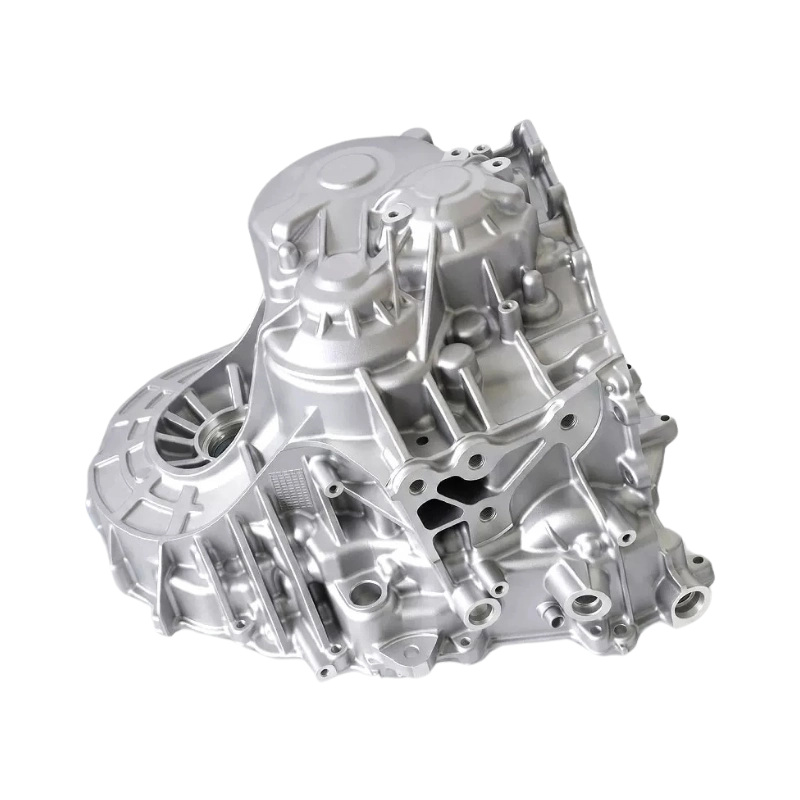
ISO 9001:2015 Certified
30+ Die Casting Materials
100,000+ Parts Casted
Design Support
Die Casting Processes
YTD Foundry offers multiple die-casting processes to serve different applications. Through our network, you have access to advanced die-casting manufacturing capabilities in China. With our expertise in casting and project management, you get full-service support for developing die-casting components.
Hot Chamber Die Casting
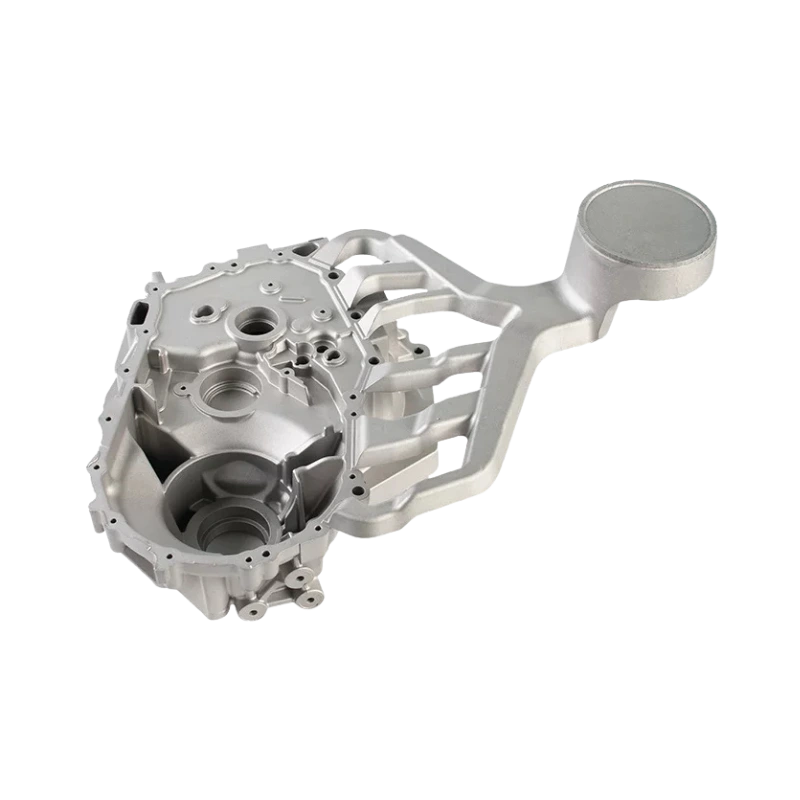
Utilizing an immersed furnace for rapid cycles, this high-efficiency process delivers exceptional dimensional accuracy, making it ideal for high-volume, thin-walled, and intricate precision components.
Cold Chamber Die Casting
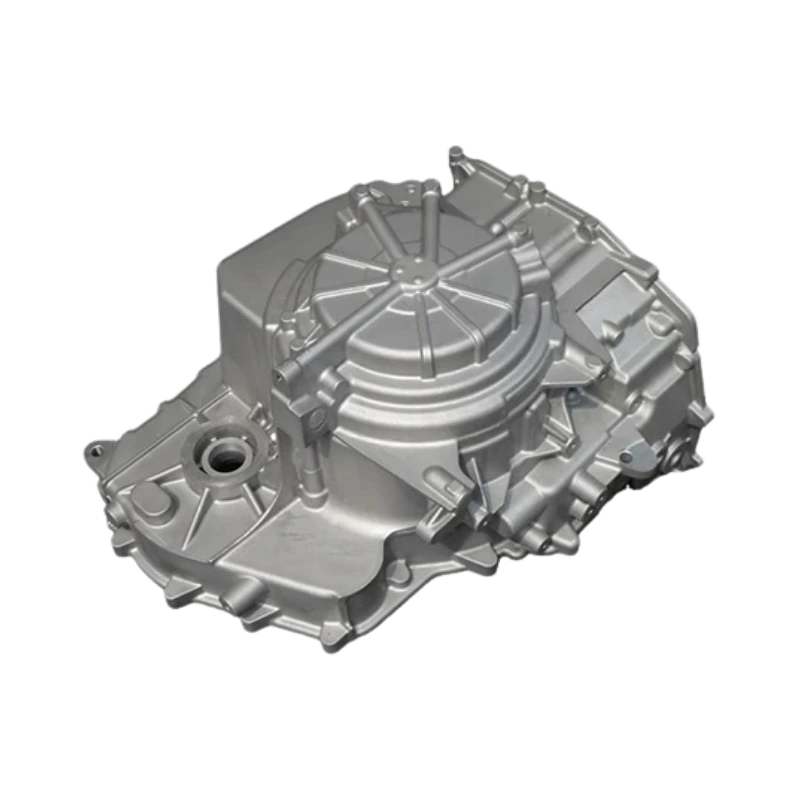
By injecting molten metal from an external furnace, cold chamber die casting ensures maximum structural integrity and density for heavy-duty parts cast with aluminum and high-melting-point metals.
Vacuum Die Casting
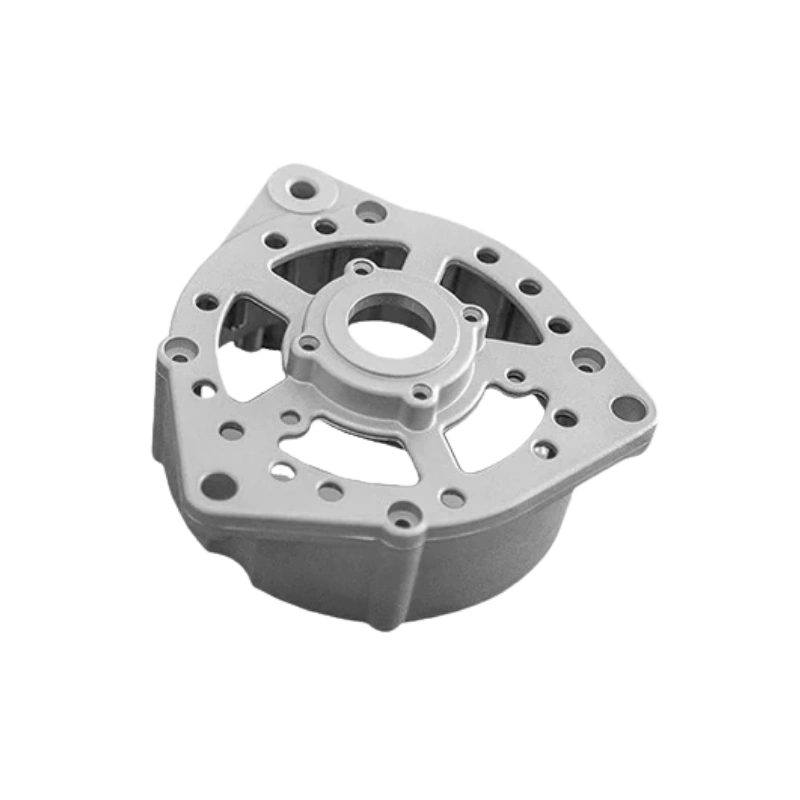
Vacuum die casting evacuates air from the mold to eliminate porosity, creating ultra-dense components perfectly suited for critical welding, CNC finishing, and premium surface treatments.
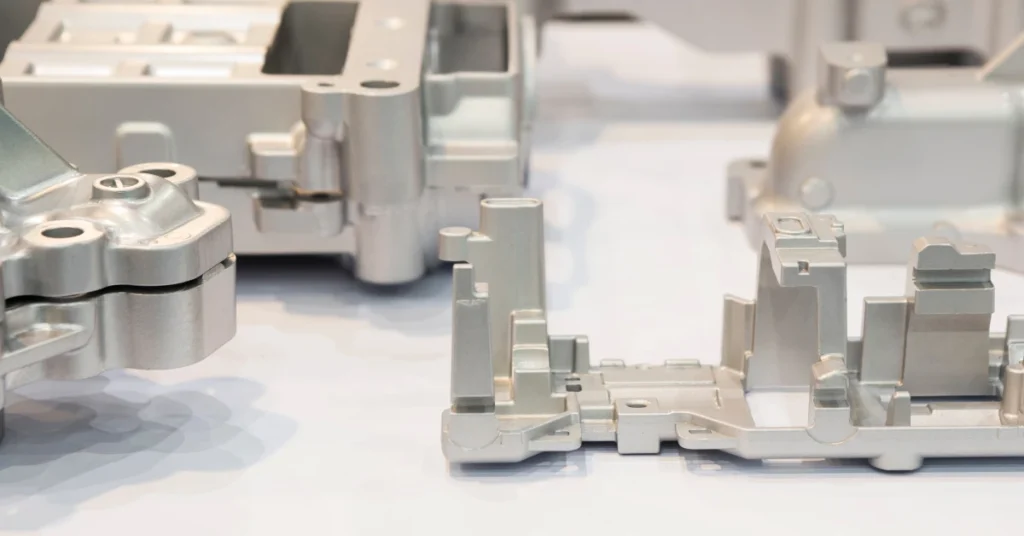
Why Work With YTD Foundry?
Every project has unique requirements, and the best die casting process depends on more than the alloy alone. Part geometry, production volume, mechanical performance, surface finish, and cost objectives all play a role in selecting the right manufacturing solution.
Instead of asking you to navigate these decisions alone, our engineering team evaluates your project and recommends the most suitable process. With access to hot chamber, cold chamber, vacuum die casting, and complementary manufacturing capabilities through our production network, we match your requirements with the right technology—not simply the processes we offer.
From Concept to Production
Whether you already have production-ready drawings or only an initial concept, we provide engineering support, process selection, tooling, die casting, machining, surface finishing, and quality inspection—all through a single manufacturing partner.
Request a QuoteDie Casting Processes Comparison
| Process | Part Weight | Max Part Size | Min Wall Thickness | Tolerances |
|---|---|---|---|---|
| Hot Chamber | 0.04 – 11 lbs | Up to 11.8 in | 0.020 in | ±0.002 in |
| Cold Chamber | 0.22 – 44 lbs | Up to 31.5 in | 0.032 in | ±0.004 in |
| Vacuum Die Casting | 0.22 – 44 lbs | Up to 31.5 in | 0.032 in (Down to 0.024 in)* | ±0.004 in |
| Process | Part Weight | Max Part Size | Min Wall Thickness | Tolerances |
|---|---|---|---|---|
| Hot Chamber | 0.02 – 5 kg | Up to 300 mm | 0.5 mm | ±0.05mm |
| Cold Chamber | 0.1 – 20 kg | Up to 800 mm | 0.8 mm | ±0.10mm |
| Vacuum Die Casting | 0.1 – 20 kg | Up to 800 mm | 0.8 mm | ±0.10mm |
Die Casting Materials
Aluminum Alloy
Aluminum alloy provides an excellent balance of strength, corrosion resistance, thermal conductivity, and lightweight performance. It is one of the most widely used die casting materials for structural and high-performance components.
- A360
- A380
- A383
- ADC10
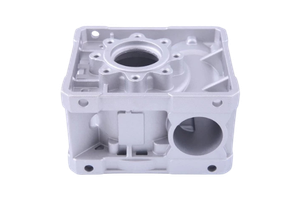
Magnesium Alloy
Magnesium alloy is the lightest structural metal used in die casting, offering an excellent strength-to-weight ratio, good machinability, and outstanding vibration damping. It is widely used for lightweight components in automotive, electronics, and aerospace applications.
- AZ91D
- AM60B
- AM50A
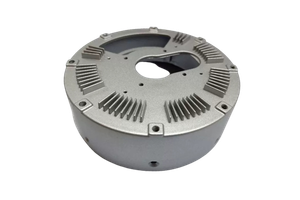
Zinc Alloy
Zinc alloy is a versatile die casting material known for its excellent dimensional accuracy, smooth surface finish, and ability to produce complex, thin-wall parts. It is ideal for high-volume production requiring precision and fine details.
- Zamak 3
- Zamak 5
- ZA-8
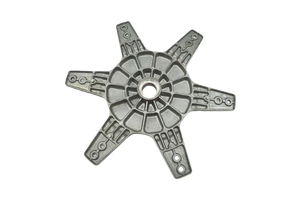
Surface Finish Options for Die Castings
Combining our in-house surface finishing capability and network flexibility, we offer comprehensive surface finish options for die-casting components.
Request a QuoteIn-House Capabilities
- CNC Finishing
- Heat Treatment
- Sand/Bead Blasting
- Polishing
Through Our Network
- Powder Coating
- Electroplating
- Anoadizing(Type Ⅱ,Ⅲ)
- Painting
What is Die Casting?
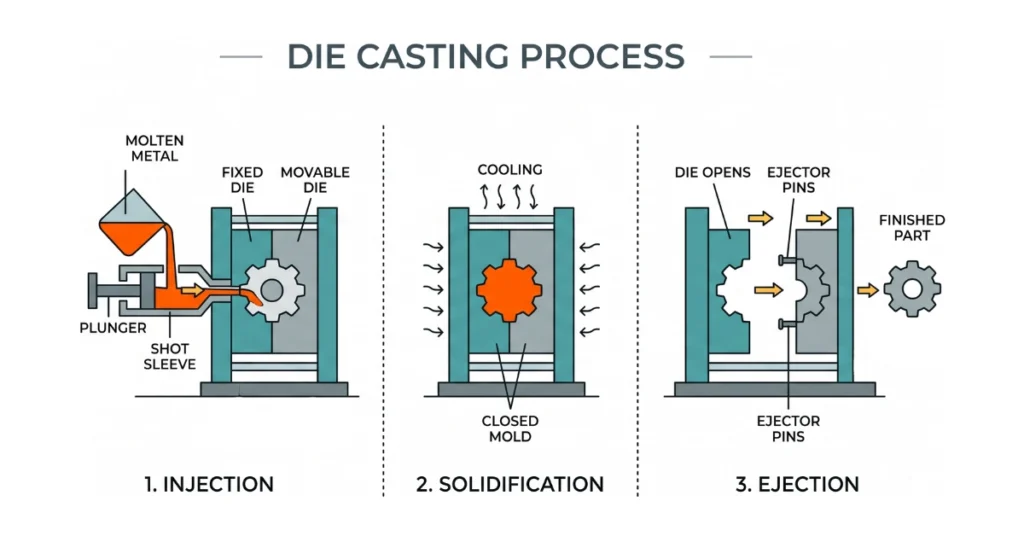
Die casting is a metal manufacturing process used to produce highly detailed, sharply defined metal parts. Think of it like a heavy-duty, industrial version of injection molding, but instead of plastic, it uses molten metal.
Instead of pouring liquid metal into a single-use sand mold (like traditional sand casting), die casting forces molten metal under extreme pressure into reusable steel molds called dies. This permanent die helps shorten the casting cycle to seconds or minutes and significantly reduces unit costs in mass production.
However, die casting is also limited by the die used. You can only cast non-ferrous metals with low melting points, such as aluminum, zinc, and magnesium alloys. Since the parts need to be ejected from the die, the part geometries are also limited to shapes that allow for straightforward ejection, typically requiring draft angles and avoiding complex undercuts.
When to Use Die Casting
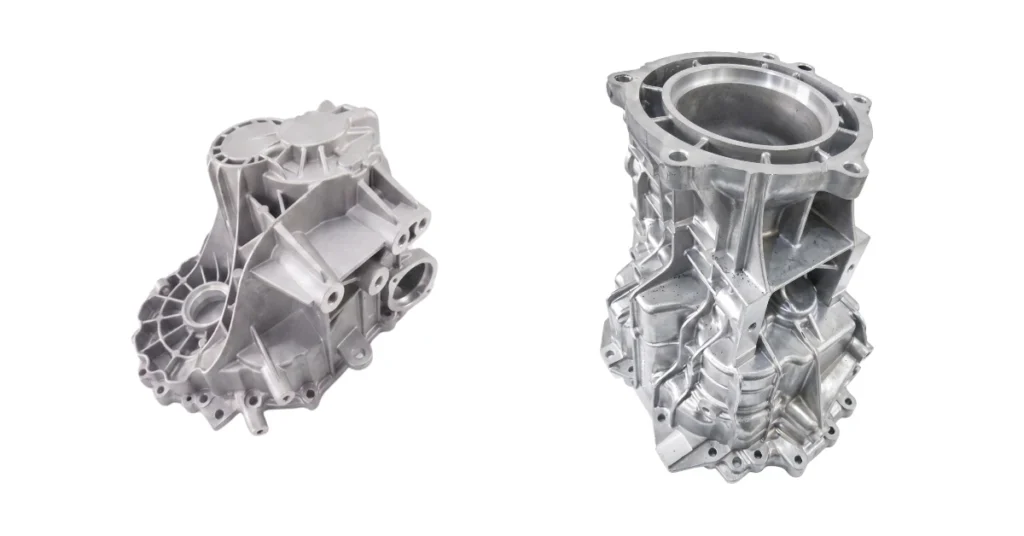
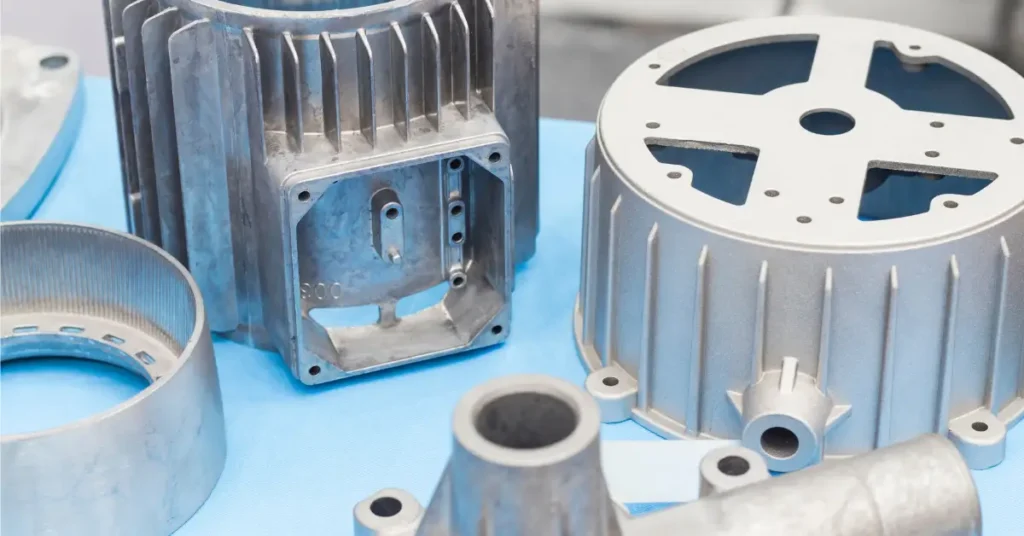
- Complex external shapes with thin walls and high dimensional stability
- Parts ranging from a few ounces up to around 50 lbs. (22 kg)
- An excellent as-cast surface finish of 32 – 125 RMS
- Minimal to no post-cast machining (near-net shape)
- Extremely tight and consistent tolerances
- High-volume production runs where stable designs justify higher initial tooling costs
- The lowest per-part cost for large-scale manufacturing
- Long tooling life capable of producing hundreds of thousands of parts before replacement
- Rapid production cycle times with high efficiency
Advantages of Die Casting
- Rapid Cycle Times: Capable of producing thousands of components per day.
- Cost-Effective for Volume: High-speed automation significantly lowers per-part costs at scale.
- Tight Tolerances & Smooth Surface: Delivers excellent dimensional accuracy and smooth finishes straight out of the mold.
- Net-Shape Manufacturing: Produces complex geometries, internal threads, and thin walls. Greatly reduces the need for secondary CNC finishing, minimizing material waste.
- Fine Grain Structure: Rapid cooling under high pressure creates a dense outer skin, yielding high strength and hardness.
- Component Integration: Multiple parts can be combined into a single die-cast component, eliminating subsequent assembly and welding steps.
Common Die Casting Applications
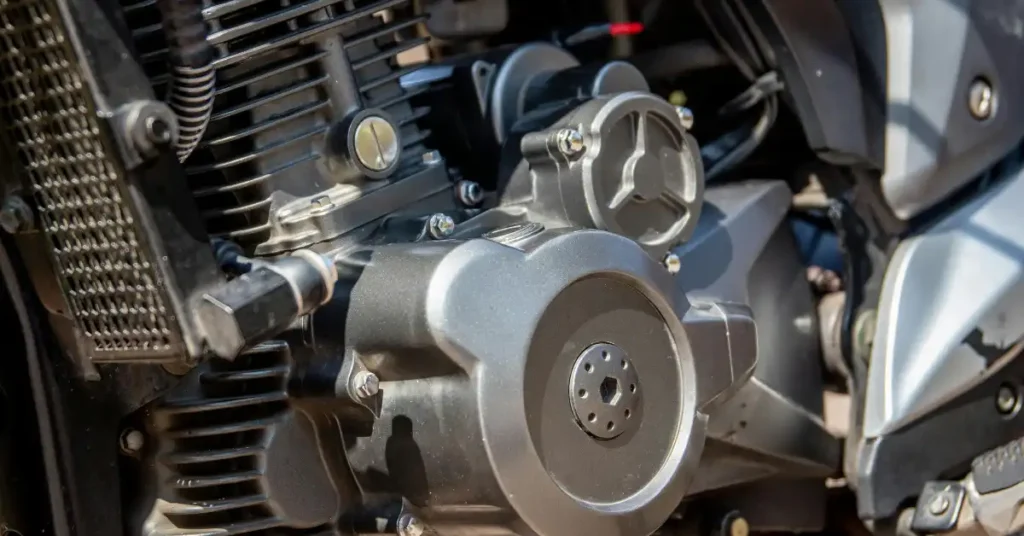
Die casting is used across many industries to manufacture durable, dimensionally consistent metal components that require repeatable quality and an attractive surface finish. Aluminum, zinc, and magnesium alloys make the process suitable for everything from lightweight structural parts to decorative housings and precision mechanical components
- Automotive & Transportation
- Consumer Electronics
- Telecommunications
- Household Appliances & Tools
- Hardware & Plumbing
- Aerospace & Defense
- Medical Devices
Die Casting FAQs
How much does die casting cost?
The total cost consists of three main parts: tooling, raw materials, and production labor. The upfront tooling (mold) fee is the largest expense, but it pays off in high-volume production.
Among the three processes we support, hot chamber die casting is the most cost-effective due to faster cycle times and longer mold life, though it is limited to low-melting-point alloys like zinc. Cold chamber is standard for aluminum, while vacuum die casting is the most expensive but necessary for eliminating porosity in high-strength structural parts.
How do I choose the die-casting process?
The first thing you must decide is the material, as the metal dictates the machine type. Other key factors include your part’s mechanical strength requirements, cosmetic needs, and budget. You don’t need to be a casting expert—submit your design, and our engineering team will evaluate your application and select the most efficient process for you.
What die casting materials do you support?
We focus on the three most common and reliable commercial alloys:
- Aluminum Alloy: Excellent strength-to-weight ratio and high operating temperatures.
- Zinc Alloy: Superior castability, high precision, and easy to plate or paint.
- Magnesium Alloy: The lightest structural metal available, with outstanding machinability.
What are your standard tolerances?
Our standard “as-cast” tolerance is ±0.05 mm to ± 0.1mm, depending on the size and geometry of the part. If your design requires tighter precision for assembly, we achieve it through post-casting CNC machining.
What are the limitations of die casting products?
While die casting is highly efficient, there are physical constraints to keep in mind:
- Shape: Designs with deep undercuts or completely enclosed hollow spaces are difficult or impossible to cast without complex, expensive mold sliders.
- Weight: Parts are limited by the clamping force (tonnage) of the machines. Extremely heavy solid blocks are better suited for other processes.
- Thickness: Thick, uneven walls lead to shrinkage and air pockets. Uniform wall thickness is required for structural integrity.
What are the maximum and minimum part sizes you can produce?
We handle a wide range of sizes. We can cast precision micro-parts weighing as little as 5 grams, all the way up to large automotive or telecom housings weighing up to 20 kilograms.
What information is required to get an accurate quote?
To give you a precise manufacturing cost, we need:
- 3D CAD Model: STEP (.stp) or IGES (.igs) format.
- 2D Drawing: PDF format calling out critical tolerances and surface finish requirements.
- Material: Specific alloy grade (e.g., A380, ADC12, Zamak 3).
- Volume: Estimated order quantity or annual volume.
What secondary operations and surface finishes do you offer?
We provide a complete, turnkey service so you don’t have to manage multiple vendors. Once the raw part is cast, we handle essential secondary operations in-house, such as precision CNC machining, tapping, and threading. By combining our own production capabilities with our established supply chain network, we can offer almost any surface finish available on the market—including powder coating, electroplating, anodizing, painting, sandblasting, and more.
Related Resources
Compare CNC machining from stock with investment casting and CNC finishing. Understand how geometry, tolerances, materials, quantity, and lead time
Read More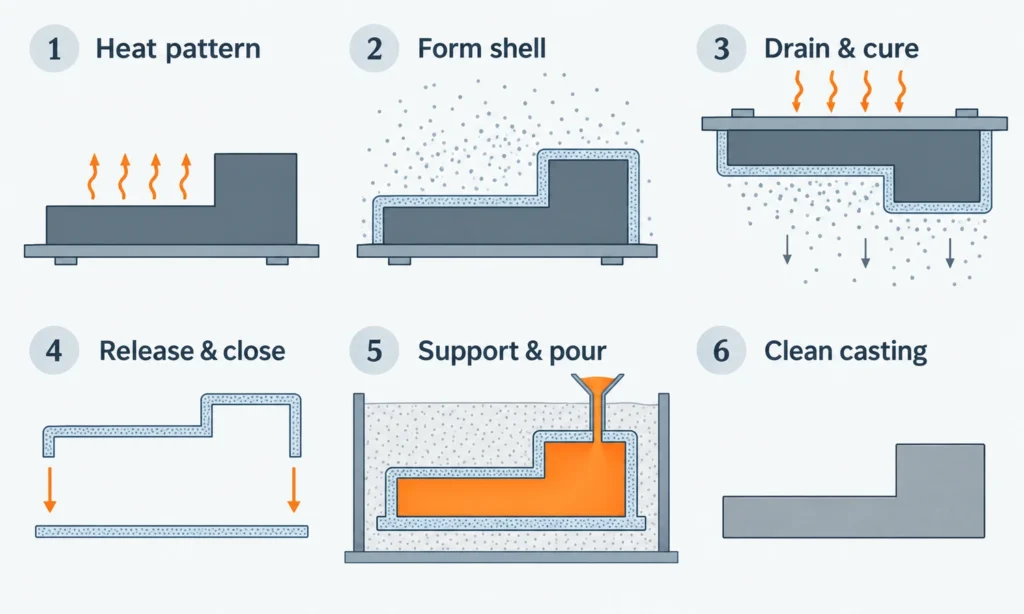
Explore how shell mold casting works, where it is used, and how mold design, alloy, defects, finishing, and production volume
Read More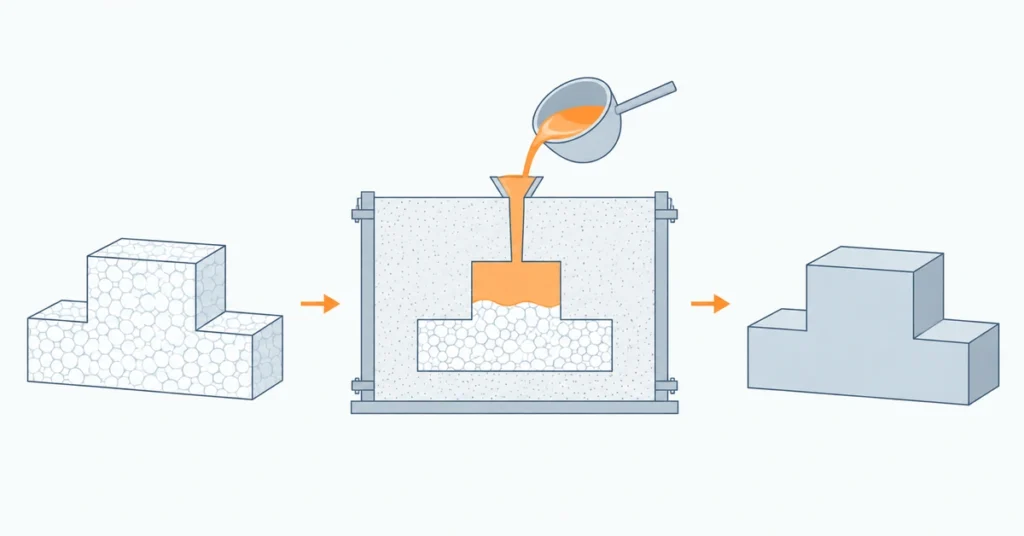
Lost foam casting pours metal directly into a coated foam pattern supported by dry sand. Learn how the process works,
Read More