Nickel alloys are used when conventional steels cannot provide enough corrosion resistance, high-temperature strength, or long-term durability.
But “nickel alloy” covers a wide range of materials. Inconel, Hastelloy, Monel, Alloy 625, and Alloy 718 all belong somewhere within this broader family, yet they can have very different properties and applications.
This guide explains what nickel alloys are, their common types and grades, how they compare with stainless steel, and how to choose the right alloy for a specific application.
What Is a Nickel Alloy?
A nickel alloy is a metallic material in which nickel plays a major role in determining the material’s properties.
Nickel readily combines with chromium, molybdenum, iron, copper, cobalt, aluminum, titanium, niobium, and other elements. By changing these additions, metallurgists can create materials for very different operating conditions.
Some nickel alloys are designed mainly for acids, seawater, or other corrosive environments. Others retain mechanical strength after long exposure to high temperatures. Some are developed for special properties such as low thermal expansion or shape-memory behavior.
It is also useful to distinguish between nickel-containing Und nickel-based alloys.
Many stainless steels contain nickel but remain primarily iron-based. In a nickel-based alloy, nickel is the principal or balancing element and has a much greater influence on the material’s behavior.
Why Are Nickel Alloys Used?
Nickel alloys are valuable because they can combine several demanding properties within the same material.
The exact performance depends on the grade, but four characteristics explain most industrial uses.
Corrosion Resistance
Nickel alloys can perform well in environments involving seawater, chlorides, acids, alkalis, and aggressive chemical mixtures.
Different alloying additions change that resistance. Chromium improves oxidation and corrosion resistance, while molybdenum can improve performance against reducing acids, pitting, and crevice corrosion.
No nickel alloy, however, is universally corrosion-proof. Alloy 625, C-276, Alloy 400, and Alloy 825 all respond differently depending on the chemical, concentration, temperature, and operating conditions.
High-Temperature Strength
Some nickel-based alloys retain useful mechanical strength at temperatures where conventional steels become much weaker.
This makes them important in gas turbines, industrial furnaces, combustion equipment, exhaust systems, and other high-temperature applications.
Creep Resistance
A component under continuous load at elevated temperature can slowly deform over time. This is known as creep.
Many nickel-based superalloys are specifically designed to maintain their structure and mechanical properties during prolonged high-temperature loading.
Oxidation Resistance
Chromium-containing nickel alloys can form protective oxide layers at elevated temperatures, reducing further oxidation.
This combination of heat resistance, corrosion resistance, and mechanical performance is one reason nickel alloys are frequently used when several difficult service conditions occur at the same time.
Is Nickel Alloy the Same as Inconel?
No.
Inconel is a family of nickel alloys, but not every nickel alloy is Inconel.
Inconel is a trade-name family associated mainly with nickel-chromium-based alloys. Common examples include Alloy 600, Alloy 625, and Alloy 718.
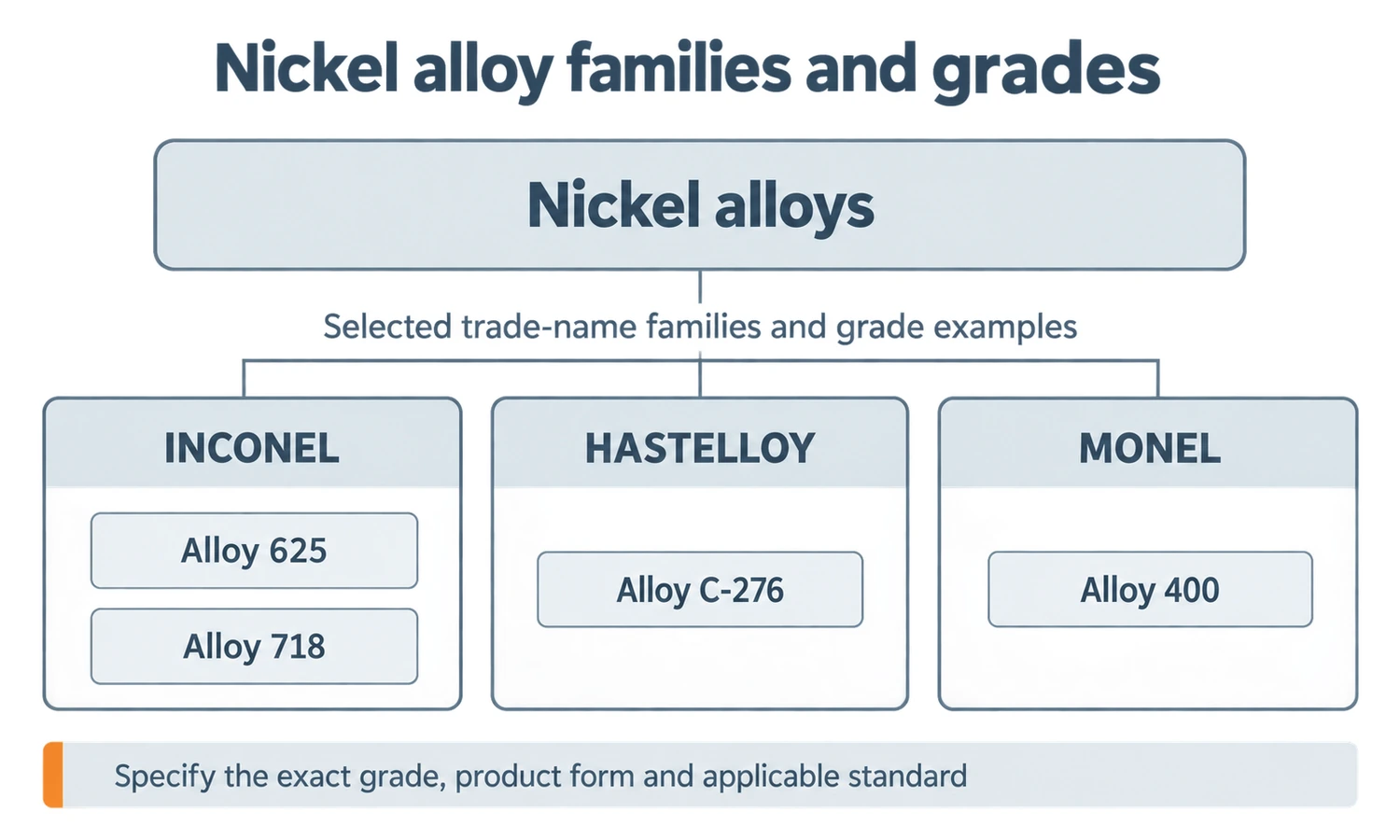
Other familiar nickel-alloy names include:
- Hastelloy – commonly associated with alloys developed for severe corrosion and high-temperature service.
- Monel – primarily nickel-copper alloys.
- Incoloy – commonly nickel-iron-chromium alloys.
- Nimonic – nickel-based alloys developed primarily for high-temperature applications.
These names are useful, but a manufacturing drawing should normally identify the actual alloy grade or UNS designation.
Simply specifying “Inconel” is not enough. Alloy 625 and Alloy 718, for example, have quite different properties and typical uses.
Common Types of Nickel Alloys
Nickel alloys can be grouped roughly according to their main alloying elements and intended performance.
Nickel-Copper Alloys
Alloy 400 is one of the best-known examples.
Nickel-copper alloys provide useful resistance to seawater and several chemical environments and are commonly used for marine equipment, pumps, valves, and heat exchangers.
Nickel-Chromium Alloys
Adding chromium improves oxidation resistance and performance in many elevated-temperature environments.
Alloy 600 is a familiar example used in furnace equipment, heat-treatment systems, and chemical-processing applications.
Nickel-Chromium-Molybdenum Alloys
Alloys such as 625 and C-276 combine nickel and chromium with significant molybdenum.
They are widely considered for aggressive environments involving chlorides, acids, pitting, or crevice corrosion.
Nickel-Based Superalloys
Nickel-based superalloys are designed for demanding high-temperature applications.
They can retain strength, resist creep, and remain structurally stable at temperatures where many conventional metals lose much of their mechanical capability.
Alloy 718 is one of the most familiar examples.
There are also alloys developed specifically for cast high-temperature components. K18, for example, is a Chinese cast nickel-based superalloy and is one of the superalloys processed at YTD Foundry.
Common Nickel Alloy Grades
Several grades appear frequently in industrial applications.
| Alloy | UNS | Key Characteristic | Typical Applications |
|---|---|---|---|
| Alloy 600 | N06600 | Oxidation and corrosion resistance at elevated temperatures | Furnaces, heat treatment, chemical equipment |
| Alloy 625 | N06625 | Strong corrosion resistance with useful mechanical strength | Marine, chemical, offshore, aerospace |
| Alloy 718 | N07718 | High strength at elevated temperatures | Turbines, aerospace, energy equipment |
| Alloy C-276 | N10276 | Resistance to many severe chemical environments | Chemical processing, pollution control |
| Alloy 400 | N04400 | Seawater and selected chemical resistance | Marine equipment, pumps, valves |
| Alloy 825 | N08825 | Resistance to several acidic and chloride environments | Chemical processing, oil and gas |
This table is only a starting point.
A general description such as “corrosion resistant” is not enough to select a grade. Chemical exposure, temperature, mechanical loading, manufacturing route, and applicable standards all matter.
Alloy 625 vs. Alloy 718
Alloy 625 and Alloy 718 are often mentioned together, but their design priorities are different.
Alloy 625 is primarily valued for corrosion resistance combined with useful strength.
Its nickel-chromium-molybdenum composition makes it widely used in marine, chemical-processing, offshore, and other aggressive environments.
Alloy 718 is better known for high mechanical strength.
It is precipitation hardened and is widely used in turbines, aerospace equipment, energy systems, and other applications involving substantial loads at elevated temperatures.
A simple starting point is:
- Consider the 625 direction when severe corrosion resistance is the dominant requirement.
- Consider the 718 direction when high mechanical strength at elevated temperature is the dominant requirement.
The final selection still depends on service temperature, environment, loading, product form, and applicable specifications.
Nickel Alloy vs. Stainless Steel
Nickel alloys and stainless steels overlap in some applications, but they are not interchangeable.
Most stainless steels are iron-based. Nickel-based alloys contain much more nickel and may also contain relatively high amounts of molybdenum, chromium, niobium, cobalt, or other alloying elements.
| Faktor | Edelstahl | Nickel Alloy |
|---|---|---|
| Base Material | Usually iron | Nickel is a major or primary element |
| Cost | Im Allgemeinen niedriger | Im Allgemeinen höher |
| Corrosion Resistance | Good to excellent depending on grade | Certain grades perform better in severe environments |
| High-Temperature Performance | Suitable grades perform well | Some nickel alloys retain strength under more demanding temperatures |
| Machinability | Can be difficult | Often more difficult |
| Typical Use | General to demanding industrial service | Usually selected when conventional steels approach their limits |
Nickel alloy is therefore not automatically the better choice.
If 304, 316L, duplex stainless steel, or another conventional alloy safely meets the corrosion, temperature, and mechanical requirements, it will often be more economical.
Nickel alloys become worth considering when conventional steels begin to reach their limits because of severe corrosion, elevated temperature, creep, or a combination of demanding service conditions.
Can Nickel Alloys Be Cast?
Yes.
Many nickel alloys and nickel-based superalloys can be produced through Feinguss.
Casting can be particularly attractive because nickel alloys are generally expensive materials and many grades are difficult to machine.
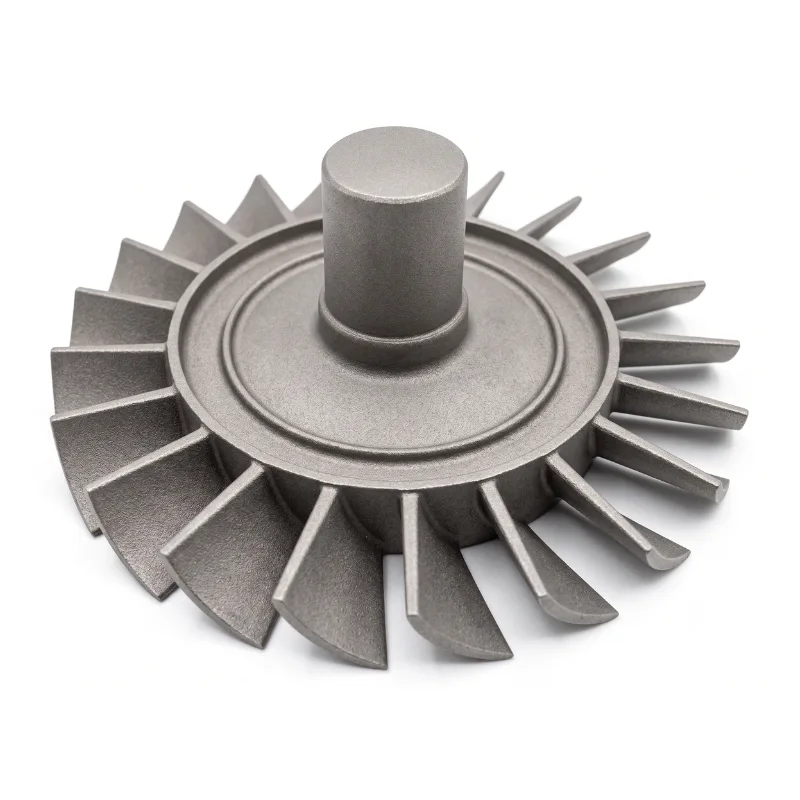
Consider a component with curved surfaces, ribs, bosses, internal passages, and several integrated features. Machining the entire shape from a nickel-alloy billet may require purchasing substantially more material than remains in the finished component and spending considerable machining time removing it.
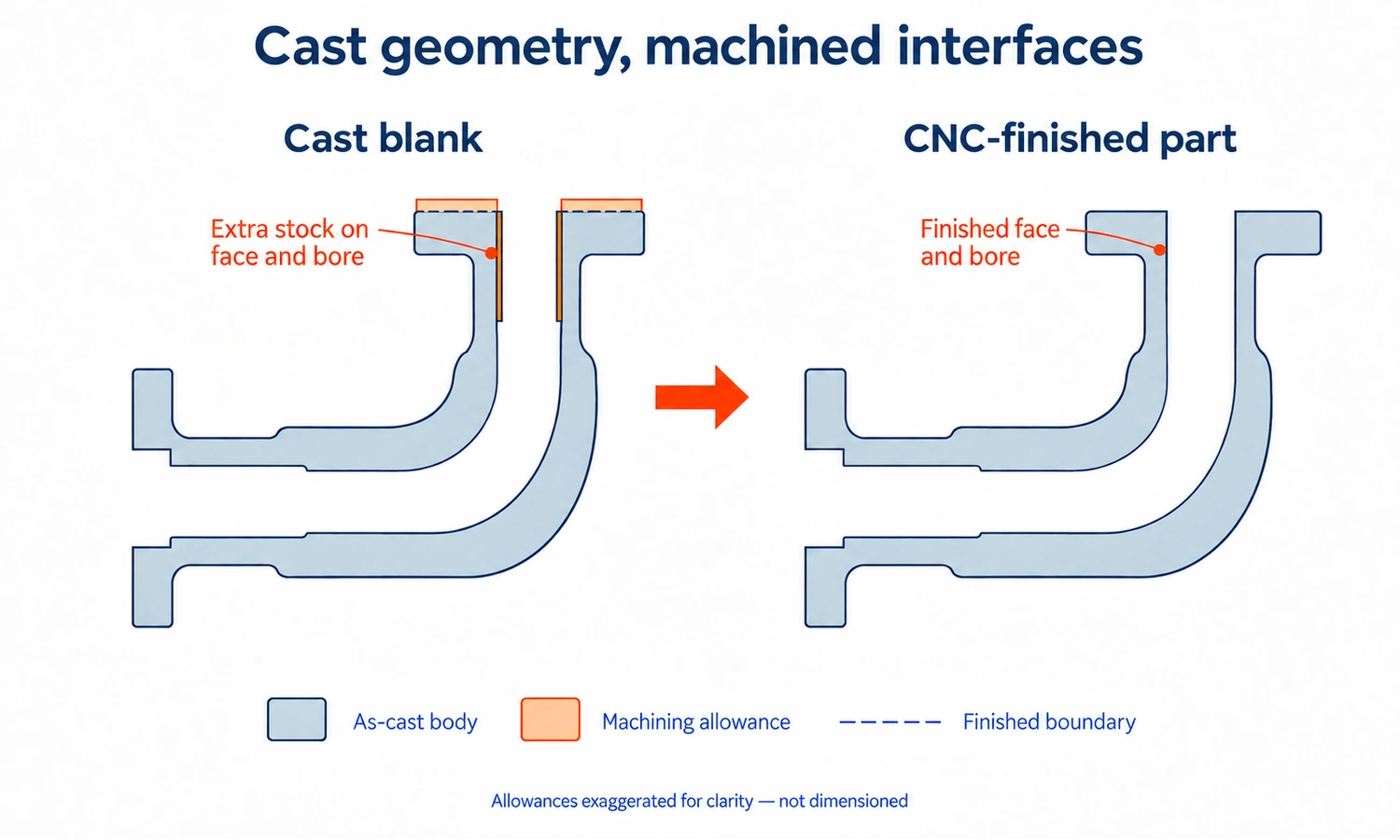
Investment casting creates much of the geometry directly. CNC machining can then focus on sealing faces, bores, threads, mounting surfaces, and other features that actually require tighter tolerances.
Nickel-alloy casting does, however, require careful process control.
Some nickel-based superalloys contain reactive elements such as aluminum and titanium. Melting conditions, shell materials, pouring, solidification, and heat treatment can all influence the finished casting.
Vacuum melting is therefore used for selected high-performance superalloys where controlling atmospheric interaction and unwanted reactions is particularly important.
At YTD Foundry, investment casting is our in-house casting process. We use vacuum melting equipment for suitable nickel-, cobalt-, and iron-based superalloys and can continue the project through tooling, casting, heat treatment, CNC machining, and inspection.
Manufacturing Nickel-Alloy Components
Selecting an alloy is only part of the job. The material still has to become a component that meets the drawing.
CNC-Bearbeitung
Many nickel alloys retain significant strength at the temperatures generated around a cutting tool. Some also work-harden rapidly.
This combination can produce high cutting forces, concentrated heat, and accelerated tool wear.
For complex parts, near-net-shape manufacturing can reduce the amount of nickel alloy that needs to be machined away.
The goal is not necessarily to eliminate machining. It is to use machining where precision is required instead of machining the entire component from solid material.
At YTD Foundry, critical areas such as sealing faces, bearing locations, bores, threads, and mounting surfaces can be CNC finished after casting.
Wärmebehandlung
Heat treatment depends heavily on the specific alloy.
Solid-solution-strengthened nickel alloys may be solution annealed to establish the required structure and properties.
Precipitation-hardening alloys such as Alloy 718 use controlled solution and aging treatments to develop their mechanical strength.
Cast superalloys may require additional thermal treatments depending on the alloy and specification.
Heat treatment should therefore be considered part of the material and manufacturing specification rather than simply a final finishing step.
Oberflächenveredelung
Surface requirements depend on how the component will be used.
Cleaning, blasting, polishing, passivation, or specialized coatings may be applied after casting and machining.
YTD completes standard blasting, polishing, machining, and other core post-processing within its manufacturing workflow, while specialized surface treatments can be coordinated through qualified processing partners when required.
Where Are Nickel Alloys Used?
Nickel alloys are typically used where corrosion, temperature, or mechanical loading exceeds the practical capability of more conventional materials.
| Industry | Typical Applications |
|---|---|
| Aerospace | Turbine components, engine hardware, exhaust parts |
| Energie | Gas turbines, power-generation equipment, high-temperature components |
| Chemische Verarbeitung | Valves, pumps, mixers, reactor components |
| Oil & Gas | Valves, wellhead parts, downhole equipment |
| Marine & Offshore | Pumps, valves, fasteners, seawater-handling components |
| Industrial Furnaces | Fixtures, supports, burner components |
| Pollution Control | Scrubbers, valves, ducts, fluid-handling components |
The industry name alone does not determine the material.
A marine component is not automatically Alloy 625, and a turbine component is not automatically Alloy 718. Actual operating conditions determine whether a particular alloy makes sense.
How to Choose and Specify a Nickel Alloy
Choosing a nickel alloy should start with the conditions the component must survive, not with a familiar name such as Inconel or Hastelloy.
Start With the Service Conditions
Consider the factors that determine material performance:
- Corrosive environment: chemicals, concentration, chlorides, pH, and contaminants.
- Operating temperature: including continuous service and thermal cycling.
- Mechanical loads: pressure, fatigue, vibration, creep, and impact.
- Expected service life: especially when replacement or failure is costly.
- Manufacturing route: machining, forging, casting, welding, or a combination of processes.
These requirements usually narrow the large nickel-alloy family to a much smaller group of realistic candidates.
Define the Production Requirements
Once the material is selected, the manufacturing specification should define how the actual component will be produced and accepted.
Depending on the project, this may include:
- Exact alloy grade and applicable standard
- Drawing or 3D model
- Required quantity
- Heat-treatment condition
- Dimensional tolerances
- Machined features
- Surface requirements
- Inspection and testing
- Material certification
For cast components, machining allowances and nondestructive testing requirements may also need to be specified.
If you have an existing component but no usable CAD model, YTD Foundry can also support reverse engineering from a physical sample. Geometry can be reconstructed first, while material requirements, critical dimensions, tolerances, and any intended changes are confirmed separately.
Why Are Nickel Alloys Expensive?
Raw material is only part of the cost.
Nickel alloys may contain expensive elements such as molybdenum, cobalt, niobium, and tungsten. Manufacturing can also require controlled melting, specialized heat treatment, slower machining, more cutting tools, and additional inspection.
Material utilization therefore matters.
If a finished component weighs 5 kg but must be machined from a 15 kg billet, the manufacturer pays for much more than the material remaining in the final part.
For suitable geometries and production quantities, near-net-shape casting can reduce that waste.
Casting is not automatically cheaper, however. Tooling, casting yield, quantity, machining, inspection, and material cost should all be considered together.
Schlussbetrachtung
Nickel alloys solve problems that conventional steels cannot always handle, particularly severe corrosion, high temperatures, and demanding mechanical loads. The right choice should start with the operating environment rather than a familiar alloy name.
If your nickel-alloy component requires casting, YTD Foundry can support tooling, investment casting, vacuum melting for suitable superalloys, heat treatment, CNC machining, and inspection.
Send us your drawing, 3D model, or sample details, and we can evaluate the material and manufacturing requirements for your project.
Häufig gestellte Fragen
Is Nickel Alloy Magnetic?
It depends on the alloy. The nickel-alloy family includes materials made for magnetic applications as well as grades with very low magnetic permeability. Composition, heat treatment, cold work, and temperature can all affect magnetic behavior, so the answer has to come from the particular grade and condition.
What Is the Melting Point of Nickel Alloy?
There is no single melting point for nickel alloys. Each composition melts over its own temperature range. That range is also different from a safe service-temperature limit, which depends on load, exposure time, atmosphere, and the properties required from the part.
Does Nickel Alloy Rust?
Nickel alloys can corrode, although many grades resist particular environments far better than ordinary steels. Whether visible rust or another form of attack develops depends on the grade, fluid or atmosphere, temperature, stress, surface condition, and exposure time. “Nickel alloy” by itself is not a guarantee of immunity.
Is Nickel Alloy the Same as Stainless Steel?
No. Stainless steel is normally iron-based, while nickel-based alloys use nickel as a major or primary element. Nickel alloys are typically considered for more demanding combinations of corrosion, temperature, and mechanical performance.
Is Inconel a Nickel Alloy?
Yes. Inconel is a trade-name family of nickel alloys. Alloy 600, Alloy 625, and Alloy 718 are familiar examples, but their compositions and properties are different.
Are All Nickel Alloys Superalloys?
No. Superalloys are only one group within the much larger nickel-alloy family. Nickel-copper alloys and special nickel alloys designed for thermal, electrical, or other properties are not all superalloys.
Is Nickel Alloy Better Than 316 Stainless Steel?
Only when the application requires it. 316 stainless steel is more economical and performs well in many environments. A nickel alloy becomes useful when corrosion, temperature, or mechanical requirements exceed what the stainless steel can reliably handle.
Can Nickel Alloy Be Investment Cast?
Yes. Investment casting is widely used for complex nickel-alloy components because it produces near-net shapes and can reduce the amount of difficult machining required afterward.
Are Nickel Alloys Difficult to Machine?
Many are. They can retain strength at cutting temperatures, work-harden, and accelerate tool wear. This is one reason casting or forging may be used to create the basic geometry before final CNC machining.